
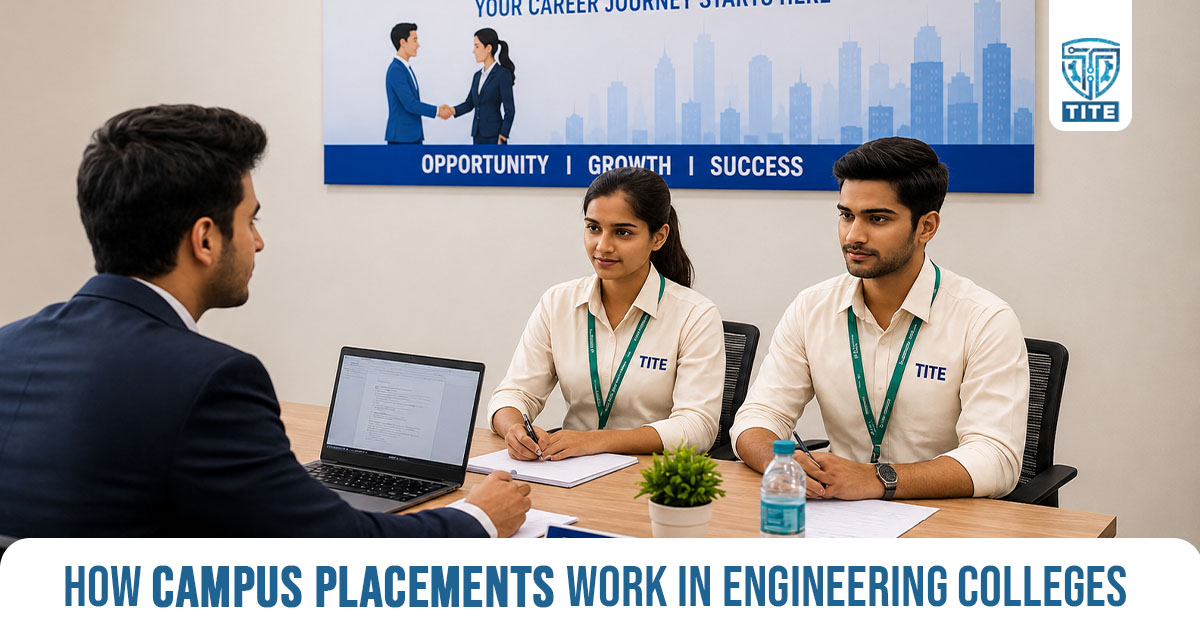
How Campus Placements Work in Engineering Colleges
Summary: Campus placements are one of the biggest reasons students choose an engineering college. Understanding how the placement process works helps students prepare from the very first semester instead of waiting until the final year. This article explains every stage of engineering campus placements, the skills recruiters expect and how the right college can shape a successful career. It also highlights why choosing the right institution is the first step toward a rewarding future.
The day you step into engineering college, you're probably thinking about classes, new friends, hostel life and campus events. But somewhere in the back of your mind is one question that almost every engineering student asks—"Will I get a good placement?" The truth is that campus placements don't begin in the final semester. They begin from your very first day at college. The habits you build, the skills you develop and the opportunities you grab all contribute to your placement journey. At TITE, students are encouraged to prepare for industry from the beginning through practical learning, industry exposure and career-focused training.
How Does the Placement Cell Work?
Every engineering college has a Training and Placement Cell responsible for organizing recruitment activities. This team maintains relationships with companies, schedules campus drives, conducts pre-placement sessions and prepares students for interviews.
Besides inviting recruiters, placement cells arrange aptitude classes, communication training, coding sessions, mock interviews, personality development workshops, resume building and group discussion practice. These activities ensure students are industry-ready before placement season begins.
Students looking for btech colleges in bhubaneswar should evaluate not only academic infrastructure but also the strength of the placement cell, industry partnerships, internship opportunities and recruiter network.
Why Are Campus Placements So Important?
Campus placements are one of the biggest advantages of pursuing an engineering degree because they provide students with direct access to recruiters before graduation. Instead of spending months searching for jobs after completing their degree, students get the opportunity to interview with leading companies on campus. A strong placement ecosystem also reflects the quality of industry connections, practical training, and career support offered by an institution. While comparing colleges, students should look beyond academics and also evaluate TITE college courses and fees, placement assistance, internships and industry exposure to make an informed decision.
Campus placements also help students transition smoothly from college life to the professional world. Through aptitude training, mock interviews, resume-building sessions and technical workshops, students gain the confidence needed to perform well during recruitment. These experiences improve communication skills, problem-solving abilities and workplace readiness, ensuring graduates are prepared for the expectations of modern employers. Colleges that invest in career development from the first semester often produce graduates who are more competitive in the job market.
For students exploring b tech colleges in odisha, placement records should be an important factor when choosing where to study. A college with strong industry partnerships, internship opportunities and a dedicated placement cell offers a significant career advantage. Good campus placements not only help students secure their first job but also lay the foundation for long-term professional growth, financial independence, and future career success.
Understanding the Engineering Campus Placement Process
The campus placement process follows a structured recruitment cycle that helps companies identify the most suitable candidates while giving students an opportunity to showcase their technical knowledge, communication skills and overall potential. Although the selection process may vary slightly across organizations, most engineering recruiters follow these five essential stages.
- Company Registration & Pre-Placement Presentation - The placement cell invites companies to the campus based on industry demand and student specializations. Before recruitment begins, the company conducts a pre-placement talk where representatives explain their business, job roles, eligibility criteria, salary package, work culture, career growth opportunities and selection process. This session helps students understand the company and decide whether to participate in the recruitment drive.
- Online Aptitude & Technical Assessment - The first screening round usually consists of an online assessment that evaluates a student's aptitude, logical reasoning, verbal ability, technical knowledge and coding skills (for software-related roles). This stage helps recruiters shortlist candidates who possess the required analytical and problem-solving abilities for the position.
- Technical Interview - Candidates who clear the assessment move on to the technical interview. Here, interviewers assess subject knowledge, programming concepts, engineering fundamentals, project work, internships and practical problem-solving skills. Students are expected to explain their academic projects confidently and demonstrate their understanding of real-world engineering applications.
- HR Interview & Personality Evaluation - HR interview focuses on evaluating a candidate's communication skills, confidence, teamwork, leadership qualities, career aspirations, adaptability and cultural fit within the organization. Recruiters also assess how well candidates handle situational questions and whether they possess the professional attitude required for the workplace.
- Final Selection & Job Offer - After successfully clearing all interview rounds, shortlisted candidates receive the final job offer from the recruiting company. The placement cell announces the selected students and offer letters are issued with details such as the job role, compensation package, joining location and onboarding timeline. Once selected, students can focus on completing their academic requirements before beginning their professional careers.
How Campus Placements Happen and How to Prepare for Them
If you are in your first or second year, campus placements may seem like a distant goal. But ask any final-year engineering student, and they'll tell you how quickly four years fly by. One day you're attending your first lecture, and before you know it, companies are visiting your campus for recruitment. That's why placement preparation shouldn't begin in the final semester, it should start from your very first year. Students searching for top engineering colleges in Odisha should always choose an institution that focuses on career development from day one rather than only during the placement season.
Preparing for placements doesn't mean studying for 10 hours a day. It means being consistent. Spend time each week improving your technical concepts, practicing aptitude questions, learning new technologies, working on projects and strengthening your communication skills. Internships, hackathons, coding competitions and certification courses can significantly improve your profile and give you practical experience that recruiters value.
Most importantly, remember that companies hire more than just good academic performers. They look for students who can think critically, solve real world problems, communicate effectively and work well in teams. That's why choosing the right college is so important. While comparing institutions, don't just focus on rankings, also explore placement records, industry collaborations and internship opportunities. The right engineering college doesn't simply prepare you for exams; it prepares you for a successful career.
Essential Things to Keep in Mind Before Your Campus Placement Drive
Campus placements can feel overwhelming, but the right preparation can make a huge difference. Instead of trying to learn everything at the last minute, focus on improving consistently throughout your engineering journey. If you're exploring btech colleges in Bhubaneswar, choose one that offers regular placement training, internships, and industry interaction from the early semesters. Here are some practical tips every engineering student should follow before sitting for campus placements.
- Strengthen Your Basics - Recruiters often ask questions from core engineering subjects and programming fundamentals. Revise your important concepts regularly instead of cramming everything just before interviews.
- Build a Resume You Can Defend - Don't fill your resume with random certifications. Include genuine projects, internships, technical skills and achievements that you can confidently explain during interviews.
- Practice Aptitude Every Week - Quantitative aptitude, logical reasoning and verbal ability are usually the first screening rounds. Solving a few questions daily is much more effective than studying only before placement season.
- Improve Your Communication Skills - You don't need perfect English, but you should be able to express your ideas clearly and confidently. Practice introducing yourself, explaining your projects and answering common HR questions with friends or mentors.
- Take Projects Seriously - Your academic and personal projects often become the highlight of technical interviews. Understand every aspect of your project, including the challenges you faced, the technologies used and the outcomes achieved.
- Gain Practical Experience - Internships, hackathons, coding contests, workshops and technical events help you apply classroom knowledge in real-world situations. These experiences also make your profile more attractive to recruiters.
- Stay Updated About the Industry - Read about current technology trends, emerging tools and the companies visiting your campus. Knowing about the recruiter and its work demonstrates genuine interest during interviews.
- Believe in Your Preparation - It's natural to feel nervous before interviews, but don't compare yourself with others. Every student has a different journey. Stay confident, be honest in your answers and focus on showcasing your skills rather than trying to impress with memorized responses. Often, confidence, clarity and a willingness to learn leave a stronger impression than having all the right answers.
Common Mistakes to Avoid During Campus Placements
No matter how talented you are, a few avoidable mistakes can reduce your chances of securing a good job offer. Campus placements test not only your technical knowledge but also your preparation, confidence and professionalism. Students studying at the top engineering colleges in Odisha often receive excellent placement opportunities, but making the most of those opportunities depends on how well they prepare. Here are some common mistakes every engineering student should avoid.
- Starting Preparation Too Late - Many students wait until the final semester to begin preparing for placements. This leaves little time to improve aptitude, coding skills, communication and technical concepts. Consistent preparation from the first or second year always gives better results.
- Ignoring Core Engineering Subjects - Recruiters frequently ask questions from fundamental engineering topics related to your branch. Focusing only on coding or aptitude while neglecting core subjects can affect your performance in technical interviews.
- Creating an Unrealistic Resume - Avoid adding skills, certifications or projects that you cannot explain. Interviewers often ask detailed questions about everything mentioned in your resume. Keep it honest, relevant and backed by real experience.
- Poor Communication During Interviews - Even technically strong candidates can struggle if they cannot communicate their thoughts clearly. Practice introducing yourself, explaining your projects and answering HR questions confidently before the interview.
- Not Researching the Company - Walking into an interview without knowing what the company does is a common mistake. Spend some time understanding the company's products, services, work culture and job role so that your answers are more relevant.
- Overlooking Aptitude Preparation - Many students underestimate aptitude tests, even though they are often the first elimination round. Regular practice in quantitative aptitude, logical reasoning and verbal ability can significantly improve your chances of clearing the initial screening.
- Losing Confidence After One Rejection - Not getting selected in your first interview doesn't define your capabilities. Every interview is a learning experience that helps you improve for the next opportunity. Stay positive, learn from your mistakes and keep preparing consistently.
Campus placements are the gateway to your professional journey, but success doesn't happen overnight, it is built through consistent learning, practical experience and the right guidance throughout your engineering years. By choosing a college that prioritizes industry exposure, internships, skill development and placement training, you give yourself a significant advantage in today's competitive job market. If you're ready to take the next step toward a rewarding engineering career, explore the admissions page and begin your journey with TITE. For students comparing btech colleges in bhubaneswar, selecting an institution that focuses on both academic excellence and career readiness can make all the difference in shaping a successful future.
