Best Engineering Courses After 12th Science in 2026
Completing Class 12 Science is a significant milestone in every student's academic journey. It is the stage where aspirations begin to take shape and career decisions start influencing the future. For many students, engineering remains one of the most sought-after career paths as it combines innovation, problem-solving, technology and limitless opportunities.
As we step into 2026, the engineering landscape is evolving rapidly. Traditional engineering branches continue to offer excellent career prospects, while new-age specializations driven by artificial intelligence, automation and digital transformation are creating exciting possibilities. The challenge for students is not whether to pursue engineering but which engineering course aligns best with their interests, skills and career goals.
Students exploring engineering opportunities should begin by understanding emerging industry trends and selecting engineering colleges in Bhubaneswar that emphasize innovation, practical learning and industry exposure. Institutions such as TITE are preparing students for future-ready careers through quality technical education and industry-oriented programs.
Why Engineering Continues to Be a Top Career Choice
Engineering remains one of the most versatile professional fields since engineers play a crucial role in solving real-world challenges. From designing smart cities and developing AI-powered applications to building sustainable infrastructure and advancing healthcare technologies, engineers contribute to every sector of society.
The demand for skilled engineers is increasing due to:
- Growth of Artificial Intelligence and Machine Learning
- Expansion of digital technologies
- Development of smart manufacturing systems
- Increased focus on cybersecurity
- Rapid advancements in automation and robotics
- Growing emphasis on sustainable engineering solutions
Artificial Intelligence and Machine Learning Engineering
One of the most transformative technologies of the modern era is Artificial Intelligence and Machine Learning. Businesses, healthcare organizations, financial institutions and governments are increasingly relying on AI-driven solutions to improve efficiency and decision-making.
AI Engineering focuses on:
- Machine Learning
- Deep Learning
- Natural Language Processing
- Computer Vision
- Neural Networks
- Predictive Analytics
Career Opportunities
| Career Stage | Private Sector Roles | Government Sector Roles | Expected Salary Range |
|---|---|---|---|
| Entry Level (0–2 Years) | AI Engineer, Machine Learning Engineer, Data Analyst, AI Associate, Junior Data Scientist | AI Research Assistant, Data Analyst in Government Projects, Technical Associate in Digital India Initiatives | ₹4 LPA – ₹10 LPA |
| Early Career (2–5 Years) | Machine Learning Engineer, Data Scientist, NLP Engineer, Computer Vision Engineer, AI Product Analyst | Scientist B, AI Specialist in Government Research Labs, Technical Officer, Data Scientist in Public Sector Organizations | ₹8 LPA – ₹18 LPA |
| Mid-Level (5–8 Years) | Senior AI Engineer, Lead Data Scientist, AI Consultant, AI Solutions Architect, ML Operations Engineer | Senior Scientist, Project Manager for AI Programs, Technical Lead in Government Technology Departments | ₹15 LPA – ₹30 LPA |
| Senior Level (8–12 Years) | AI Architect, Head of AI, Principal Data Scientist, AI Program Manager, AI Strategy Consultant | Principal Scientist, AI Project Director, Senior Technical Advisor, Government AI Mission Leader | ₹25 LPA – ₹50 LPA |
| Executive Level (12+ Years) | Chief AI Officer, VP of AI, Director of Data Science, Chief Technology Officer | Director of AI Research Centers, Government Technology Advisor, National AI Mission Leadership Roles | ₹50 LPA – ₹1 Crore |
The growing demand for AI professionals has significantly increased interest in the Best AI Engineering Colleges in Odisha, where students can gain practical exposure to emerging technologies and industry projects.
Computer Science and Engineering
Computer Science and Engineering continues to dominate the engineering sector due to its broad applications across industries. Every modern business depends on software systems, cloud infrastructure, and digital solutions.
Key areas covered in Computer Science and Engineering include:
- Programming
- Software Development
- Cloud Computing
- Database Management
- Operating Systems
- Web Technologies
Career Opportunities
Computer Science and Engineering offers career opportunities across software development, cloud computing, cybersecurity, data science, artificial intelligence, government IT services, research organizations and public sector enterprises. The demand for skilled CSE professionals continues to grow across industries.
| Career Stage | Private Sector Roles | Government Sector Roles | Expected Salary Range (India) |
|---|---|---|---|
| Entry Level (0–2 Years) | Software Developer, Web Developer, QA Engineer, Technical Support Engineer, Junior Data Analyst | Junior Programmer, IT Officer, Network Engineer, Technical Assistant, IT Support Specialist | ₹6 LPA – ₹8 LPA |
| Early Career (2–5 Years) | Software Engineer, Full-Stack Developer, Cloud Engineer, Cybersecurity Analyst, DevOps Engineer | Scientific Officer, System Engineer, Database Administrator, Cybersecurity Specialist, Data Analyst | ₹8 LPA – ₹15 LPA |
| Mid-Level (5–8 Years) | Senior Software Engineer, Solutions Architect, Data Engineer, Product Engineer, Engineering Manager | Senior Scientist, Project Engineer, Technical Lead, Senior IT Officer, PSU Engineer | ₹15 LPA – ₹25 LPA |
| Senior Level (8–12 Years) | Principal Engineer, Software Architect, Engineering Manager, Cloud Architect, Product Manager | Principal Scientist, Senior Technical Advisor, Government IT Project Manager, R&D Lead | ₹25 LPA – ₹32 LPA |
| Executive Level (12+ Years) | CTO, VP Engineering, Director of Technology, Head of Engineering, Chief Information Officer | Director (IT), Technology Advisor, Head of Government Digital Initiatives, Research Centre Director | ₹32 LPA – ₹45 Crore |
Data Science Engineering
Data is often called the new oil, and organizations worldwide are investing heavily in extracting meaningful insights from vast datasets. Professionals in this field help organizations make informed decisions through data-driven strategies.
Data Science Engineering combines:
- Statistics
- Programming
- Data Analytics
- Machine Learning
- Business Intelligence
Career Opportunities
| Career Stage | Private Sector Roles | Government Sector Roles | Typical Salary Range (India) |
|---|---|---|---|
| Entry Level (0–2 Years) | Data Analyst, Junior Data Scientist, BI Analyst, Data Engineer Trainee | Statistical Officer, Data Analyst, Project Associate, Research Assistant | ₹4 LPA – ₹8 LPA |
| Early Career (2–5 Years) | Data Scientist, Data Engineer, ML Engineer, Analytics Consultant | Scientist B, Technical Officer, Data Scientist in Government Projects | ₹8 LPA – ₹15 LPA |
| Mid-Level (5–8 Years) | Senior Data Scientist, Lead Data Engineer, Analytics Manager, AI Consultant | Senior Scientist, Project Manager, Data Analytics Lead | ₹15 LPA – ₹25 LPA |
| Senior Level (8–12 Years) | Principal Data Scientist, Data Architect, Head of Analytics, AI Solutions Architect | Principal Scientist, Senior Technical Advisor, Research Lead | ₹25 LPA – ₹40 LPA |
| Executive Level (12+ Years) | Director of Data Science, Chief Data Officer, VP Analytics, Head of AI | Director, National Data Programs, Senior Government Technology Advisor | ₹35 LPA – ₹70 LPA+ |
Robotics and Automation Engineering
Robotics and Automation Engineering is one of the fastest-growing engineering disciplines in 2026. It combines mechanical engineering, electronics, computer science, artificial intelligence, and control systems to design intelligent machines and automated processes. As industries increasingly adopt smart manufacturing, autonomous systems, and AI-driven technologies, the demand for robotics professionals continues to rise.
Key Subjects Covered
- Robotics Fundamentals
- Industrial Automation
- Artificial Intelligence
- Machine Learning
- Embedded Systems
- Sensors and Actuators
- Control Systems
- Computer Vision
- Internet of Things (IoT)
- Mechatronics
- PLC and SCADA Systems
- Autonomous Robotics
Career Opportunities
| Career Stage | Private Sector Roles | Government Sector Roles | Typical Salary Range (India) |
|---|---|---|---|
| Entry Level (0–2 Years) | Robotics Engineer Trainee, Automation Engineer, PLC Programmer, Service Engineer, Mechatronics Engineer | Junior Engineer, Technical Assistant, Project Assistant, Graduate Engineer Trainee | ₹3 LPA – ₹6 LPA |
| Early Career (2–5 Years) | Robotics Engineer, Automation Engineer, Controls Engineer, Embedded Systems Engineer, Systems Integration Engineer | Technical Officer, Project Engineer, Scientist B, Automation Specialist | ₹5 LPA – ₹10 LPA |
| Mid-Level (5–8 Years) | Senior Automation Engineer, Robotics Programmer, Control Systems Engineer, Project Manager, Automation Consultant | Senior Technical Officer, Project Manager, Senior Scientist | ₹8 LPA – ₹15 LPA |
| Senior Level (8–12 Years) | Lead Robotics Engineer, Automation Architect, Engineering Manager, Robotics Solutions Specialist | Principal Scientist, Senior Research Engineer, Technical Advisor | ₹12 LPA – ₹25 LPA |
| Executive Level (12+ Years) | Head of Automation, Director of Engineering, Robotics Practice Head, CTO | Director, Research Centre Head, Senior Technology Advisor | ₹20 LPA – ₹40 LPA+ |
Electronics and Communication Engineering
Electronics and Communication Engineering (ECE) is one of the most dynamic and versatile engineering disciplines, combining electronics, communication systems, embedded technologies, and modern digital innovations. In 2026, ECE continues to be a highly sought-after branch because it forms the backbone of technologies such as 5G networks, the Internet of Things (IoT), satellite communication, robotics, semiconductor manufacturing, and smart devices.
Key Subjects Covered
Students pursuing Electronics and Communication Engineering study:
- Analog and Digital Electronics
- Communication Systems
- Microprocessors and Microcontrollers
- Signal Processing
- Embedded Systems
- VLSI Design
- Wireless Communication
- Internet of Things (IoT)
- Antenna and Wave Propagation
- Optical Communication
- Semiconductor Devices
- Artificial Intelligence Applications in Electronics
Career Opportunities
| Career Stage | Private Sector Roles | Government Sector Roles | Typical Salary Range (India) |
|---|---|---|---|
| Entry Level (0–2 Years) | Electronics Engineer, Embedded Engineer, Telecom Engineer, Network Engineer, Hardware Engineer | Junior Engineer, Technical Assistant, Graduate Engineer Trainee, Project Associate | ₹4 LPA – ₹8 LPA |
| Early Career (2–5 Years) | Embedded Systems Engineer, VLSI Design Engineer, RF Engineer, PCB Design Engineer, Communication Engineer | Technical Officer, Scientist B, Project Engineer, Electronics Officer | ₹6 LPA – ₹12 LPA |
| Mid-Level (5–8 Years) | Senior Embedded Engineer, Senior VLSI Engineer, Systems Engineer, Network Architect, Project Manager | Senior Technical Officer, Project Manager, Senior Scientist | ₹10 LPA – ₹20 LPA |
| Senior Level (8–12 Years) | Lead Engineer, Principal Engineer, Semiconductor Design Engineer, Engineering Manager | Principal Scientist, Senior Research Engineer, Technical Advisor | ₹18 LPA – ₹35 LPA |
| Executive Level (12+ Years) | Director of Engineering, Head of R&D, Semiconductor Program Director, CTO | Director, Research Centre Head, Senior Technology Advisor | ₹30 LPA – ₹60 LPA+ |
Why Bhubaneswar Has Become an Engineering Education Hub
Over the past decade, Bhubaneswar has emerged as one of India's fastest-growing educational destinations. The city offers excellent academic infrastructure, industry connectivity, and opportunities for technical education.
Many students from across Eastern India now prefer Engineering Colleges in Bhubaneswar because of their focus on industry-oriented learning, modern facilities, and career development programs.
Choosing the Right Institution Matters
While selecting the right engineering branch is important, choosing the right college is equally critical. Quality education, experienced faculty, industry collaborations, modern laboratories, and placement support collectively influence a student's career trajectory.
Students seeking admission often evaluate Best Private B Tech Colleges in Bhubaneswar to identify institutions that offer strong academic foundations alongside practical industry exposure. A future-focused institution helps students build technical expertise, leadership qualities, communication skills, and professional confidence.
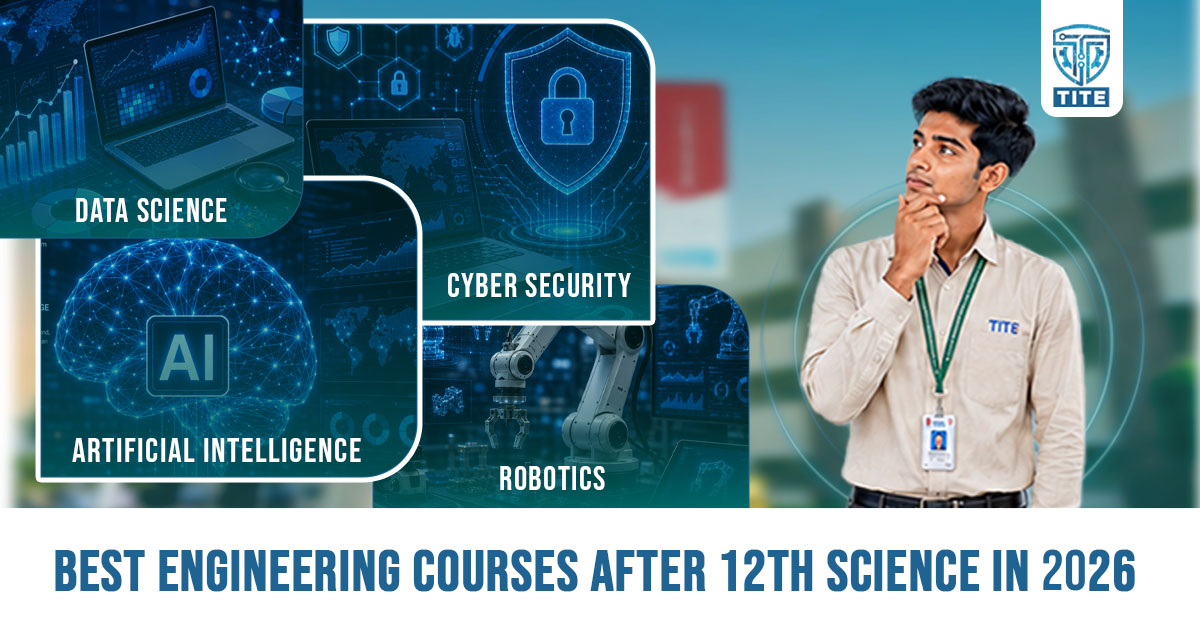
Engineering in 2026 is no longer limited to traditional career paths. Today's students can explore exciting opportunities in Artificial Intelligence, Data Science, Cyber Security, Robotics and many other emerging domains. The key is to align personal interests with future industry demands while choosing an institution that supports innovation and practical learning.
Whether you aspire to develop intelligent machines, secure digital systems, design sustainable infrastructure or create groundbreaking technologies, admissions in the engineering domain offers countless opportunities to turn your ambitions into reality. By selecting the right specialization and pursuing education from reputed institutions such as TITE, students can build successful careers and contribute meaningfully to the technological future of the world.
For students looking for quality engineering education and future-ready learning opportunities, exploring the programs available at TITE can be an excellent first step toward achieving their professional goals.
