
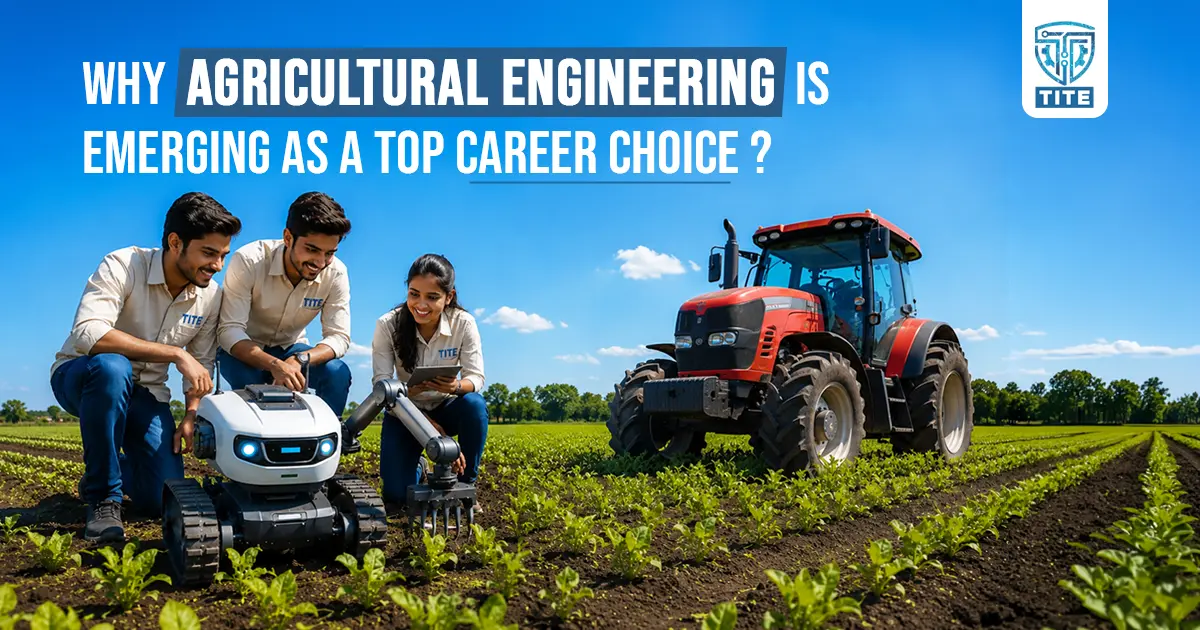
Why Agricultural Engineering Is Emerging as a Top Career Choice
Summary: Agricultural Engineering is rapidly becoming one of the most promising engineering disciplines in India as agriculture embraces automation, AI, drones, precision farming and sustainable technologies. With increasing government investments, growing demand for food security and the rise of Agri-Tech startups, graduates are finding opportunities across public and private sectors.
India's agriculture sector is undergoing a technological transformation unlike anything seen before. While agriculture continues to support nearly half of the country's workforce, the future of farming is increasingly driven by engineering innovations such as automation, drones, artificial intelligence, smart irrigation systems, robotics and precision agriculture. As a result, demand for skilled Agricultural Engineers is steadily increasing across government agencies, agribusiness companies, research institutions, and Agri-Tech startups. Students exploring agricultural engineering BTech colleges in Bhubaneswar are now recognizing that this field offers both job security and long-term growth opportunities.
Recent workforce studies indicate that technology-driven sectors connected to sustainability, food security and digital transformation are expected to witness significant employment growth over the coming decade. The World Economic Forum's Future of Jobs analysis highlights the increasing importance of green and technology enabled professions, while India's agriculture ecosystem is witnessing rapid adoption of AI and smart farming technologies.
Institutions such as TITE Bhubaneswar are responding to this shift by offering industry-focused Agricultural Engineering programs that combine engineering fundamentals with modern agricultural technologies. Simultaneously, initiatives from premier institutions such as IIT Indore AgriHub demonstrate how AI, machine learning, and data science are increasingly becoming integral parts of agricultural innovation. As India moves toward smart farming and sustainable food production, Agricultural Engineering is emerging as one of the most future-ready engineering careers available today.
What Is Agricultural Engineering?
Agricultural Engineering is a multidisciplinary branch of engineering that applies scientific and technological principles to agriculture and food production systems.
The field combines concepts from:
- Mechanical Engineering
- Civil Engineering
- Electrical Engineering
- Environmental Engineering
- Data Analytics
- Artificial Intelligence
Agricultural Engineers design and improve systems related to:
- Farm machinery and equipment
- Irrigation and drainage systems
- Soil and water conservation
- Agricultural automation
- Food processing technologies
- Renewable energy applications in farming
- Precision agriculture solutions
Modern B.Tech Agricultural Engineering is no longer limited to tractors and irrigation canals. Today's professionals work with sensors, drones, GIS mapping, robotics and AI-driven decision-making systems.
Why is Agricultural Engineering Gaining Popularity in India?
- Rapid Growth of Agri-Tech and Smart Farming: Agriculture is becoming increasingly technology-driven. AI-powered crop monitoring, drone-based pesticide spraying, satellite imaging, IoT sensors and automated irrigation systems are transforming traditional farming practices. Research studies show that AI, IoT and robotics are becoming central to improving agricultural productivity and sustainability worldwide. As these technologies become mainstream, industries require engineers who understand both agriculture and advanced engineering systems.
- Growing Focus on Food Security: India's population continues to grow thereby increasing pressure on agricultural productivity. Experts estimate that global food production must rise significantly by 2050 to meet future demand. Smart farming technologies are being adopted to improve yield while conserving resources such as water, land and energy. Agricultural Engineers play a critical role in achieving these objectives through efficient farming systems and sustainable agricultural practices.
- Government Support for Agricultural Modernization: Government of India has consistently emphasized digital agriculture initiatives, precision farming, irrigation infrastructure, mechanization of agriculture, and climate-resilient farming practices. These initiatives are generating opportunities for Agricultural Engineers in public sector organizations, government departments and development projects.
- Integration of AI and Data Science in Agriculture: Modern agriculture generates enormous amounts of data related to weather, soil health, crop conditions, irrigation and yield forecasting. Research on India's agricultural ecosystem highlights the growing importance of data-driven decision-making and AI-powered agricultural solutions. As agriculture becomes increasingly digital, professionals who can combine engineering skills with agricultural knowledge will be highly sought after.
- Diverse Career Opportunities: Unlike many students assume, Agricultural Engineering offers a wide range of career options beyond farming. Graduates can work in agricultural machinery manufacturing, irrigation technology companies, food processing industries, renewable energy firms, government departments, agricultural research organizations, Agri-Tech startups, precision farming companies, and consulting firms.
Career Opportunities After B.Tech Agricultural Engineering
Students pursuing agricultural engineering BTech Odisha are entering a field that offers diverse career opportunities across government departments, research organizations, agribusiness firms and emerging Agri-Tech startups. As agriculture becomes increasingly technology-driven, the demand for professionals who can integrate engineering solutions with modern farming practices continues to rise. Graduates can choose from technical, managerial, research and entrepreneurial career paths based on their interests and specialization.
| Sector | Job Roles | Key Recruiters | Average Salary |
|---|---|---|---|
| Government Sector | Agricultural Engineer, Soil Conservation Officer, Irrigation Engineer, Project Officer | ICAR, State Agriculture Departments, NABARD, Water Resources Departments | ₹6 LPA – ₹10 LPA |
| Agricultural Research | Research Associate, Research Engineer, Field Scientist | Agricultural Universities, ICAR Institutes, Research Labs | ₹4 LPA – ₹9 LPA |
| Farm Machinery Industry | Design Engineer, Product Development Engineer, Service Engineer | Mahindra, John Deere, TAFE, Escorts Kubota | ₹4.5 LPA – ₹10 LPA |
| Irrigation & Water Management | Irrigation Engineer, Water Resource Specialist, Project Engineer | Jain Irrigation, Government Projects, Infrastructure Firms | ₹5 LPA – ₹12 LPA |
| Agri-Tech Startups | Precision Agriculture Specialist, Drone Operations Manager, Data Analyst | Agri-Tech and Smart Farming Companies | ₹6 LPA – ₹15 LPA |
| Food Processing Industry | Plant Engineer, Quality Assurance Engineer, Operations Executive | Food Processing and FMCG Companies | ₹6 LPA – ₹10 LPA |
| Renewable Energy & Sustainability | Bioenergy Engineer, Sustainability Consultant | Renewable Energy Firms, Environmental Agencies | ₹7 LPA – ₹12 LPA |
| Higher Education & Academia | Lecturer, Assistant Professor, Research Scholar | Universities and Technical Institutions | ₹6 LPA – ₹14 LPA |
| Entrepreneurship | Agri-Consultant, Farm Technology Provider, Agri-Business Owner | Self-Employment & Startup Ecosystem | Income varies based on business scale |
| International Opportunities | Agricultural Systems Engineer, Precision Farming Consultant | Global Agribusiness and Research Organizations | ₹12 LPA – ₹30+ LPA |
Skills That Make Agricultural Engineers Future-Ready
Students pursuing BTech agricultural engineering India must develop a blend of technical, digital and managerial skills to succeed in the evolving agricultural sector. As farming increasingly adopts technologies such as AI, IoT, drones, automation and precision agriculture, employers are seeking professionals who can combine engineering expertise with innovation and problem-solving abilities. Building these future-ready skills not only enhances employability but also prepares graduates to lead the next generation of agricultural transformation.
Technical Skills
- CAD and design software
- Farm machinery systems
- Irrigation engineering
- GIS and remote sensing
- Drone technology
Digital Skills
- Data analytics
- AI and machine learning basics
- IoT applications
- Agricultural software systems
Management Skills
- Project management
- Communication
- Leadership
- Problem-solving
Why Choose Agricultural Engineering in Odisha?
Odisha's economy has strong agricultural foundations, creating a favorable environment for Agricultural Engineering education. Students pursuing agricultural engineering BTech Odisha benefit from:
- Exposure to diverse agricultural practices
- Opportunities for field-based learning
- Growing Agri-Tech ecosystem
- Government-supported agricultural initiatives
- Industry-relevant practical training
TITE: Building Future Agricultural Engineers
For students searching for agricultural engineering BTech colleges in Bhubaneswar programs with practical exposure, TITE Agricultural Engineering Program offers a curriculum focused on modern agricultural technologies, farm mechanization, irrigation systems, sustainable agriculture and industry-oriented learning. The program includes specialized laboratories, field training opportunities, and exposure to emerging agricultural technologies that prepare students for both industry and higher education pathways. With dedicated facilities and hands-on learning opportunities, students gain practical experience in solving real-world agricultural challenges.
Future Scope of Agricultural Engineering
The future of Agricultural Engineering looks exceptionally promising. Several global trends are accelerating demand in these domains in particular:
- Climate-smart agriculture
- Sustainable food production
- AI-powered farming
- Precision agriculture
- Agricultural robotics
- Water conservation technologies
- Renewable energy integration
Research and industry reports as reported by The Washington Post consistently show that agriculture is becoming more technology-intensive, creating opportunities for engineers who can bridge the gap between farming and innovation. As India continues modernizing its agricultural sector, Agricultural Engineers will play a central role in shaping the future of food production.
Agricultural Engineering is no longer a niche engineering discipline. It sits at the intersection of technology, sustainability, food security and innovation thus making it one of the most relevant career choices for the future. From AI-driven farming and smart irrigation to agricultural robotics and precision agriculture, the profession offers exciting opportunities across industries and government sectors. Students looking for strong academic foundations, industry exposure and future-ready skills can explore admission opportunities through the TITE Admissions Portal and begin building a rewarding career in one of India's fastest-evolving engineering domains.
