Direct Admission vs Entrance Exam Admission in Engineering Colleges
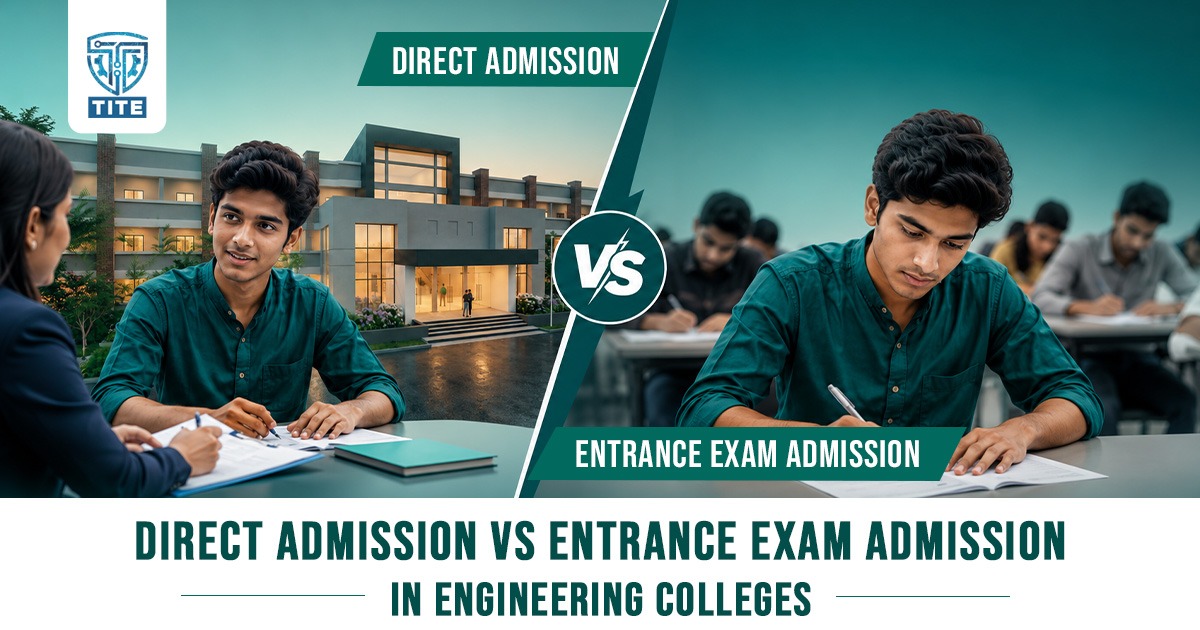
Choosing between direct admission and entrance exam admission is one of the first major decisions aspiring engineering students face. Both pathways offer unique advantages depending on a student's academic performance, career goals, and preferred institution. This article explores the differences, benefits, and considerations of each admission route to help students make an informed choice.
Engineering remains one of the most sought-after career choices among students in India. Every year, thousands of aspiring engineers compete for seats in reputed institutions through various admission processes. One of the most common questions students and parents face is whether to opt for direct admission or pursue admission through entrance examinations.
Understanding Direct Admission in Engineering Colleges
Direct admission refers to the process where students secure admission based on their academic performance in qualifying examinations, typically Class 12 or equivalent. In many private engineering institutions, seats are allotted based on merit, availability, and institutional guidelines without requiring students to qualify through a competitive entrance examination.
Key Features of Direct Admission
- Admission primarily based on Class 12 marks.
- Faster and simpler admission process.
- Reduced pressure compared to competitive examinations.
- Availability in many private engineering institutions.
- Opportunity to secure seats in preferred branches before they are filled.
Understanding Entrance Exam Admission
Entrance exam admission involves securing a seat through national, state-level, or institutional entrance examinations. Popular engineering entrance exams evaluate students' knowledge in Physics, Chemistry, and Mathematics and rank candidates based on their performance.
Key Features of Entrance Exam Admission
- Admission based on competitive exam scores.
- Merit-oriented selection process.
- Access to government and highly ranked institutions.
- Structured counseling and seat allocation.
- Increased competition among applicants.
Direct Admission vs Entrance Exam Admission: Major Differences
| Aspect | Direct Admission | Entrance Exam Admission |
|---|---|---|
| Admission Criteria | Board Exam Marks | Entrance Exam Scores |
| Competition Level | Moderate | High |
| Admission Timeline | Faster | Longer due to counseling |
| Stress Factor | Lower | Higher |
| Seat Availability | Depends on Institution | Based on Rank and Counseling |
| Flexibility in Course Selection | Greater | Depends on Rank |
Major Entrance Exams for Admission to Engineering Colleges in Odisha
JEE Main
JEE Main is one of the most important engineering entrance examinations in India and is accepted by numerous engineering colleges across Odisha and the country.
OJEE (Odisha Joint Entrance Examination)
OJEE is a state-level entrance examination conducted for admission to various professional courses in Odisha and serves as an important pathway for certain engineering programs.
JEE Advanced
Students who perform exceptionally well in JEE Main become eligible for JEE Advanced, the gateway to admission in IITs.
Institute-Specific Entrance Examinations
Some private engineering institutions conduct their own admission processes or consider a combination of academic performance and entrance examination scores.
How to Take Engineering Admission at TITE?
- Check Eligibility: Complete 10+2 with Physics and Mathematics as compulsory subjects.
- Qualify Through JEE Main or OJEE: Apply using valid entrance examination scores.
- Apply Online: Complete the online application process.
- Submit Required Documents: Provide academic and identity documents.
- Confirm Admission: Complete verification and fee payment to secure your seat.
Why Choose TITE for Engineering Admission?
Industry-Oriented Engineering Programs
- Computer Science & Engineering (CSE)
- Computer Science & Engineering (AI & ML)
- Computer Science & Engineering (Data Science)
- Computer Science & Information Technology
- Electronics & Communication Engineering
- Electrical Engineering
- Mechanical Engineering
- Civil Engineering
- Agricultural Engineering
- Automobile Engineering
Strong Academic Credentials
TITE is approved by AICTE, affiliated with BPUT, and recognized by the Government of Odisha.
AI-Integrated Learning Environment
The institute emphasizes future-ready education through AI-integrated learning, modern laboratories, and project-based training.
Placement and Career Development Support
Students benefit from internships, industry interactions, workshops, aptitude training, and placement assistance.
Modern Infrastructure and Student-Centric Campus
Advanced laboratories, smart classrooms, and innovation-driven learning spaces provide a holistic educational experience.
Conclusion
Both direct admission and entrance exam admission can lead to successful engineering careers. Students should focus on institutional quality, learning opportunities, and long-term career prospects when making their decision.
