What Skills Do Engineering Students Need for AI-Powered Jobs?
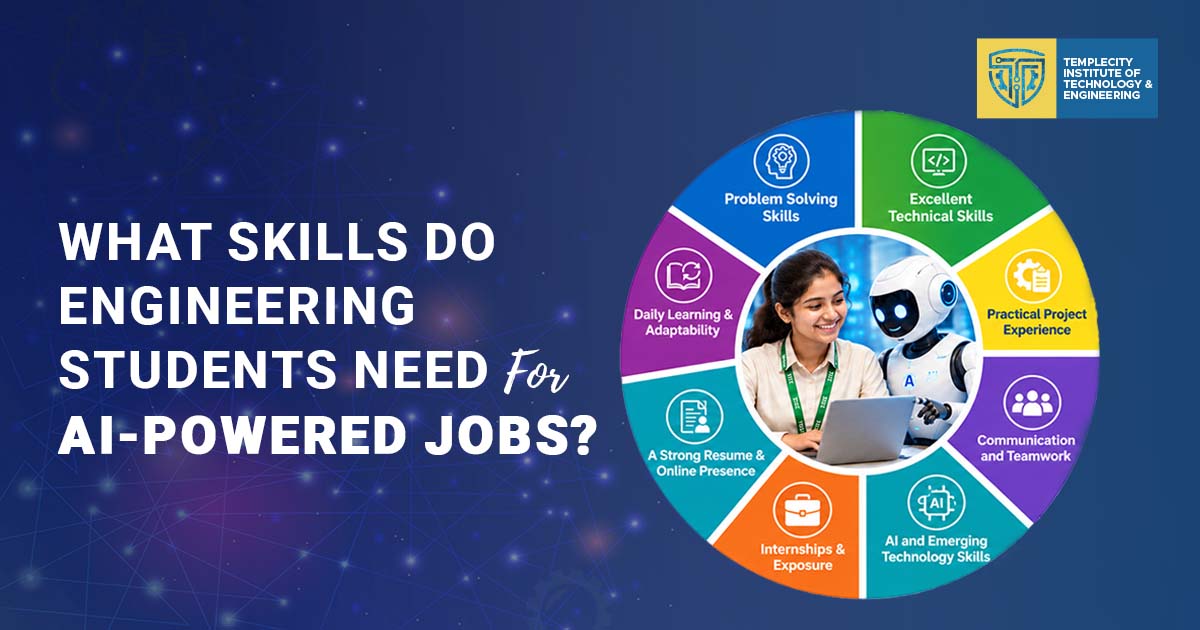
Artificial intelligence is transforming software, electronics, manufacturing, healthcare, finance and other engineering sectors. For final-year students searching for btech cse ai ml in bhubaneswar odisha, developing skills in programming, data analysis, machine learning, generative AI, cloud computing and problem-solving can help them prepare for emerging AI-powered roles. However, technical knowledge alone is not enough; students must also understand how to apply AI tools responsibly, build practical projects and communicate their solutions effectively.
Choosing the right academic environment can help students develop these capabilities through structured learning and hands-on exposure. TITE offers AI-integrated B.Tech learning along with opportunities related to laboratories, internships, live projects, industry interaction and mentorship, helping students connect engineering fundamentals with emerging technologies and career opportunities.
Why AI Skills Matter in 2026
Artificial intelligence is no longer limited to research laboratories or specialised technology companies. It is increasingly being used in software development, manufacturing, electronics, healthcare, finance, construction and business operations. The World Economic Forum reports that AI and information-processing technologies are among the major forces expected to transform businesses, while AI and big data are among the fastest-growing skill areas. Analytical thinking also remains one of the most important core skills for employers.
For final-year students, this means that learning only textbook concepts will not be enough to compete for emerging roles. Students searching for the best college for btech ai ml in bhubaneswar should look for an academic environment that combines programming, data structures, machine learning, generative AI, cloud technologies, practical projects and industry exposure. India’s Global Capability Centres are also creating growing demand for AI, data science and intelligent automation skills, making it important for students to develop both technical expertise and problem-solving, communication and teamwork abilities.
According to foundit’s June 2026 tracker, India’s Global Capability Centre (GCC) ecosystem was projected to add more than 510,000 jobs during 2026, with 64% of new roles requiring skills in AI, data science or intelligent automation. This indicates that GCCs are moving beyond traditional support functions and increasingly contributing to innovation, technology development and advanced business operations. For engineering students, the trend highlights the importance of building practical capabilities in machine learning, data analysis, automation, cloud computing and problem-solving, along with strong communication and domain knowledge.
Skill 1: Strong Engineering Fundamentals
Strong engineering fundamentals remain among the most important skills needed for AI jobs in 2026 because AI tools can generate code, but they cannot replace a student’s ability to understand a problem, evaluate a solution or identify technical errors. Final-year students should build a solid foundation in programming, mathematics, data structures, databases, system design and their core engineering subjects before moving to advanced AI tools. The World Economic Forum also highlights the growing importance of AI literacy, data analytics, cybersecurity, cloud operations and domain-specific expertise in the AI-driven workplace.
| Most important area | What students should learn | How to demonstrate it |
|---|---|---|
| Programming logic | Functions, object-oriented programming, error handling and clean coding practices. | Build a working application without relying entirely on copied code. |
| Data structures and algorithms | Arrays, strings, lists, dictionaries, trees, graphs, sorting, searching and basic complexity analysis. | Solve coding problems and explain the selected approach. |
| Mathematics and statistics | Linear algebra, probability, statistics, optimisation and logical reasoning. | Explain concepts such as overfitting, probability and model performance. |
| Core engineering knowledge | Branch-specific concepts related to electronics, manufacturing, construction, energy, automobiles or other disciplines. | Develop an AI project connected to the student’s engineering branch. |
Skill 2: Programming and Data Handling
Programming and data handling are essential skills needed for AI jobs in 2026 because most AI systems depend on clean data, reliable code and well-connected software applications. Final-year students should become comfortable with Python, SQL, data structures, APIs, Git and basic data visualisation before learning advanced machine-learning or generative-AI frameworks. When comparing the best btech colleges in odisha, students should check whether the curriculum provides practical coding, database, analytics and project-based learning rather than focusing only on theoretical concepts.
| Most important area | What students should learn | How to demonstrate it |
|---|---|---|
| Python programming | Data types, functions, modules, file handling, libraries and exception handling. | Create a complete data-processing or automation project. |
| SQL and databases | Tables, joins, filtering, grouping, database design and data retrieval. | Build a database-backed application or analytical report. |
| Data cleaning | Missing values, duplicate records, incorrect formats, outliers and inconsistent labels. | Document the data-cleaning process in a project report. |
| APIs and Git | REST APIs, JSON, authentication, Git, GitHub, branches and version control. | Publish a project repository with clear commits and documentation. |
Skill 3: Practical AI Literacy
Practical AI literacy means understanding how AI systems work, when to use them and how to assess whether their outputs are reliable; it does not require every engineering student to become an AI researcher. Students should understand concepts such as training data, model evaluation, overfitting, generative AI, automation, privacy and responsible use. For example, Google explains that overfitting occurs when a model performs well on training data but fails to generalise to new, unseen data.
| Most important area | What students should learn | How to demonstrate it |
|---|---|---|
| Machine-learning basics | Classification, regression, clustering, features, labels and model training. | Build and explain a basic machine-learning model. |
| Model evaluation | Training, validation and testing, accuracy, precision, recall, F1 score and error analysis. | Compare model results using suitable evaluation metrics. |
| Data and model limitations | Overfitting, bias, poor-quality data, hallucinations and unreliable predictions. | Include limitations and failure cases in the project documentation. |
| AI decision-making | Understand when AI is appropriate and when a simple rule-based or manual solution is better. | Justify the choice of AI for a practical engineering problem. |
Skill 4: Generative AI and LLM Application Skills
For final-year students comparing Top B.Tech Colleges in Odisha, generative-AI learning should go beyond writing prompts and include LLM integration, retrieval, API development, evaluation, security and responsible deployment. Google’s reference architecture for generative-AI applications includes embeddings and retrieval-augmented generation, showing how practical LLM systems connect models with external information sources.
| Most important area | What students should learn | How to demonstrate it |
|---|---|---|
| Prompt design | Clear instructions, context, constraints, examples and structured output requirements. | Compare basic and improved prompts with their results. |
| LLM application development | APIs, tokens, context, response handling, JSON outputs and error management. | Build a small AI application using an LLM API. |
| Embeddings and RAG | Semantic search, document chunking, vector databases and retrieval-augmented generation. | Create a document-based assistant that provides source-supported answers. |
| Verification and safety | Hallucination control, fact-checking, privacy, prompt injection and human review. | Test incorrect or malicious inputs and document the safeguards used. |
Skill 5: AI Deployment and MLOps
AI deployment and MLOps skills help students move from a machine-learning experiment in a notebook to a reliable application that can be accessed, monitored, updated and maintained. The machine-learning lifecycle includes problem framing, data processing, model development, deployment and monitoring, so students should understand the complete process rather than focusing only on model training.
| Most important area | What students should learn | How to demonstrate it |
|---|---|---|
| Model and API deployment | Model packaging, REST APIs, model serving and input validation. | Deploy a model through a functional API or application. |
| Docker and cloud basics | Containers, Dockerfiles, cloud storage, servers, permissions and environment variables. | Provide a Dockerfile and clear deployment instructions. |
| Versioning and automation | Git, model versioning, experiment tracking, CI/CD and repeatable training pipelines. | Maintain version history and automate testing or deployment. |
| Monitoring and maintenance | Latency, errors, data drift, model performance, cost and rollback procedures. | Create a basic monitoring report and demonstrate a previous-version rollback. |
Skill 6: Cybersecurity and Responsible AI
AI-powered applications must be designed with strong security, privacy, fairness and human oversight because incorrect or manipulated outputs can affect users, organisations and engineering decisions. Students looking for the best bput engineering college should choose a programme that teaches secure coding, data protection, ethical AI, bias detection, prompt-injection awareness and responsible technology use. The OWASP Top 10 for LLM Applications 2026 highlights major risks such as prompt injection, sensitive information disclosure, excessive agency, data poisoning and improper output handling.
| Most important area | What students should learn | How to demonstrate it |
|---|---|---|
| Data privacy | Safe handling of personal, academic, financial, health and confidential information. | Anonymise sensitive data and explain how it is stored and used. |
| AI security | Secure API keys, authentication, access control, prompt injection and data leakage. | Protect application credentials and test unauthorised access. |
| Fairness and bias | Identify biased data, unequal outcomes and possible discrimination in AI outputs. | Evaluate results across different groups or data categories. |
| Transparency and human oversight | Explain how the system works, state its limitations and define when human approval is required. | Add a risk, limitation and human-review section to the project. |
Skill 7: Human and Professional Skills
Technical knowledge may help a student secure an interview, but communication, teamwork, critical thinking and professionalism often determine how effectively they perform in an AI-powered workplace. When comparing the best btech colleges in odisha, students should look for opportunities such as team projects, presentations, internships, industry interaction, leadership activities and practical problem-solving, because these experiences help convert technical knowledge into workplace readiness. The NACE framework also identifies communication, critical thinking, teamwork, professionalism, leadership, technology and career development as important career-readiness competencies.
| Most important area | What students should develop | How to demonstrate it |
|---|---|---|
| Analytical thinking and problem-solving | Break down problems, compare solutions, test assumptions and make logical decisions. | Explain the reasoning behind a project’s technical choices. |
| Communication | Present technical ideas, write reports, explain results and communicate limitations. | Give a clear project presentation and maintain good documentation. |
| Teamwork | Share responsibilities, use version control, review work and resolve conflicts. | Describe individual contributions to a team project. |
| Adaptability and continuous learning | Learn new tools, accept feedback and update skills as AI technologies change. | Show improved project versions, technical learning or relevant certifications. |
| Professionalism and ethics | Meet deadlines, protect data, report errors honestly and take responsibility for outcomes. | Include accurate results, risks, limitations and ethical considerations in project work. |
Why Choose TITE for AI-Ready Engineering Education?
Choosing the right institution is important for students preparing for AI-powered engineering careers. TITE offers an AI-integrated and industry-focused B.Tech learning model that combines computer science fundamentals with Artificial Intelligence, Machine Learning, Data Analytics, Deep Learning, Computer Vision, Natural Language Processing and Cloud Computing. This approach can help students connect classroom knowledge with emerging workplace requirements.
The institute emphasises practical learning across programming, AI, machine learning, data science, databases, networking and cybersecurity through dedicated laboratories. Students pursuing BTech CSE AI ML in Bhubaneswar Odisha can strengthen their technical skills through coding practice, project-based assignments, workshops, internships and industry interactions. R&D initiatives further encourage students to work on live projects, learn from experts, participate in collaborative research and explore practical AI and machine learning applications.
As AI becomes part of everyday engineering and software development, students need more than coding knowledge to stay relevant. Strong programming and data skills, mathematical thinking, problem-solving, communication, and the ability to work with modern AI tools can make a significant difference. Employers are increasingly looking for engineers who can build, evaluate and apply AI systems, rather than simply use AI applications.
The best way to prepare is to start developing these capabilities during engineering itself through projects, internships, practical learning and continuous experimentation. A degree provides the foundation, but the ability to turn that knowledge into useful solutions is what can set a student apart in an AI-powered workplace. Students planning their engineering journey can explore the TITE admission process and begin building a future-ready academic foundation.
