Shape the Future of Energy
Build expertise in power systems, smart grids, and emerging electrical technologies with a career-focused M.Tech Electrical Engineering program in Bhubaneswar.
M.Tech Electrical Engineering at TITE, Bhubaneswar
Intake Capacity
The Department of Electrical Engineering at TITE is designed to nurture advanced technical expertise and innovation in both core and emerging domains of electrical engineering. With a curriculum aligned to industry trends such as renewable energy systems, smart grids, power electronics, and automation, TITE’s M.Tech Electrical Engineering in Bhubaneswar, Odisha, ensures that students gain both theoretical depth and hands-on proficiency. Modern laboratories, simulation tools, and research-driven learning empower the post-grad students with a strong academic foundation, making this program a highly preferred postgraduate electrical engineering course in Bhubaneswar.
At TITE, the focus goes beyond academics to real-world application and career outcomes. Students benefit from experienced faculty, industry interactions, project-based learning, and guidance for research and higher studies. The department consistently works towards preparing graduates for roles in core industries, PSUs, R&D organizations, and advanced technological sectors, making it a strong choice for those seeking M.Tech Electrical Engineering Admission 2026 in Bhubaneswar.
Programme Name: M.Tech in Electrical Engineering

OURVISION

OURMISSION
Shape the Future of Energy, Electronics & Intelligent Systems at TITE
Apply NowWhy Choose TITE for M.Tech in Electrical Engineering?
Industry-Aligned Curriculum
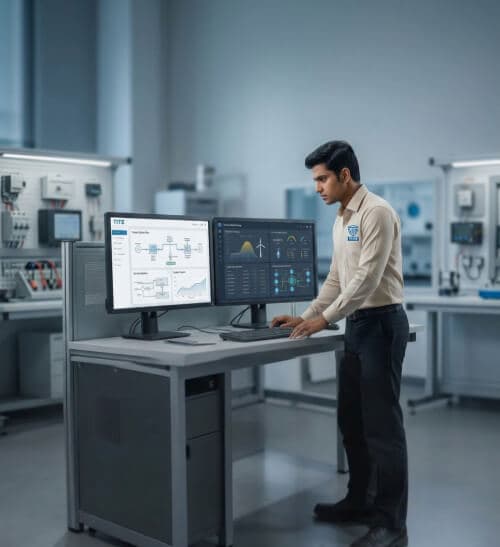
The M.Tech EE program at TITE is designed in line with current industry needs, covering advanced topics like power systems, control systems, renewable energy, and smart technologies.
Experienced Faculty & Mentorship
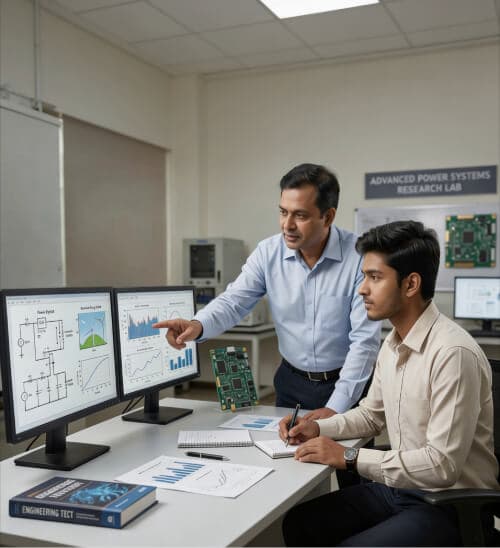
Learn from qualified and experienced faculty who guide students in research, innovation, and career planning.
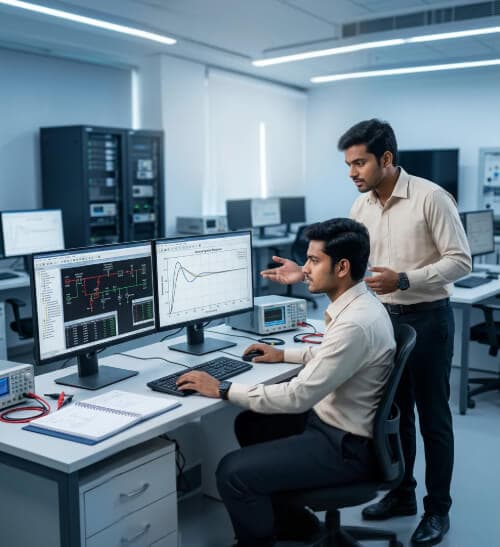
Advanced Labs & Practical Learning
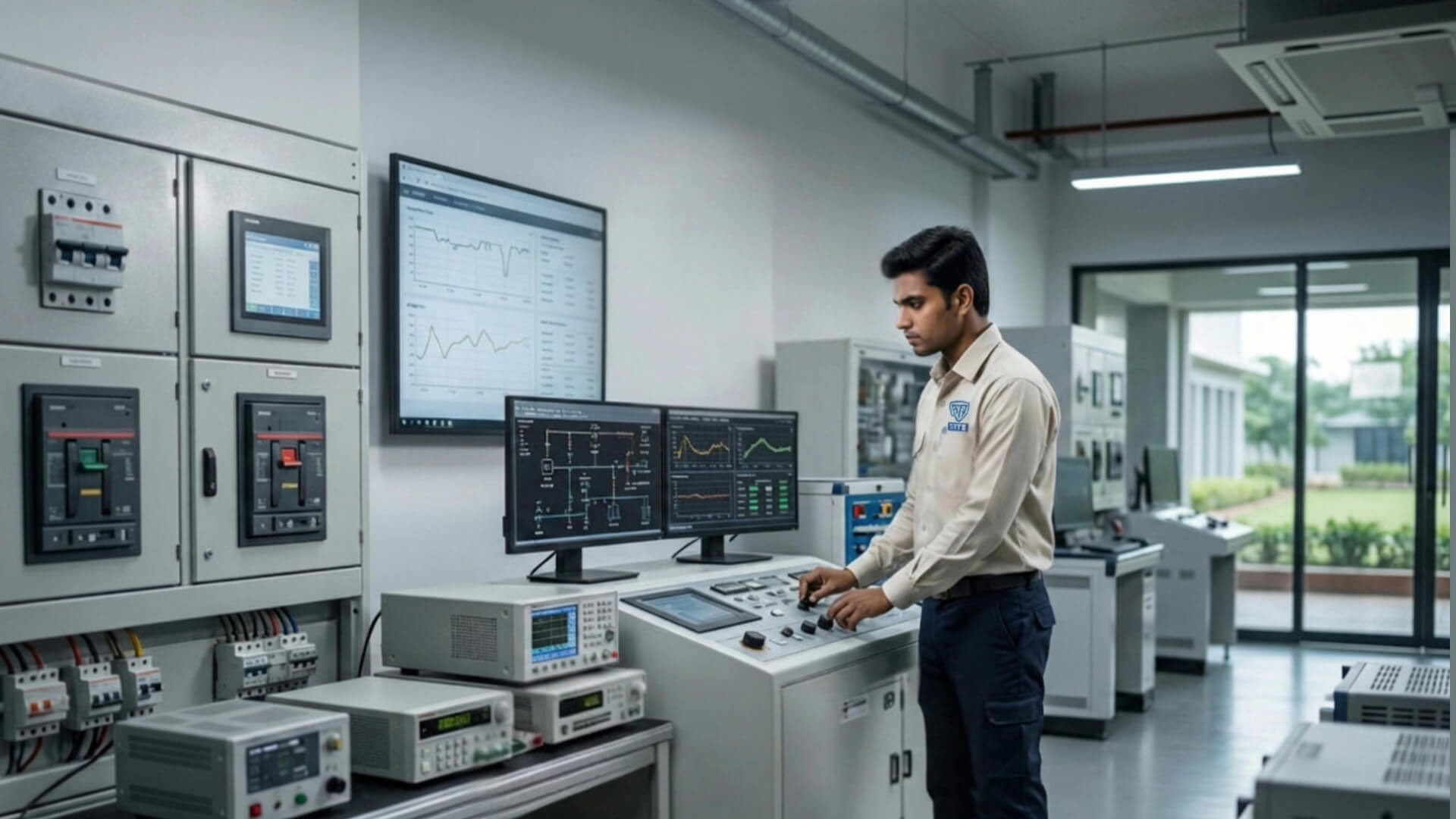
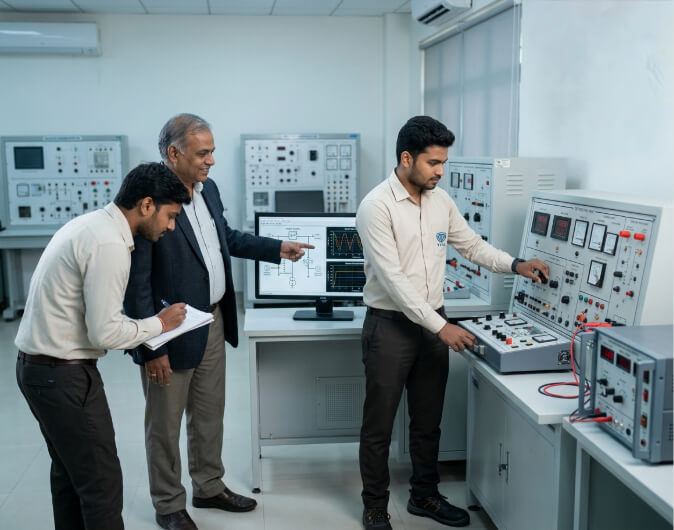
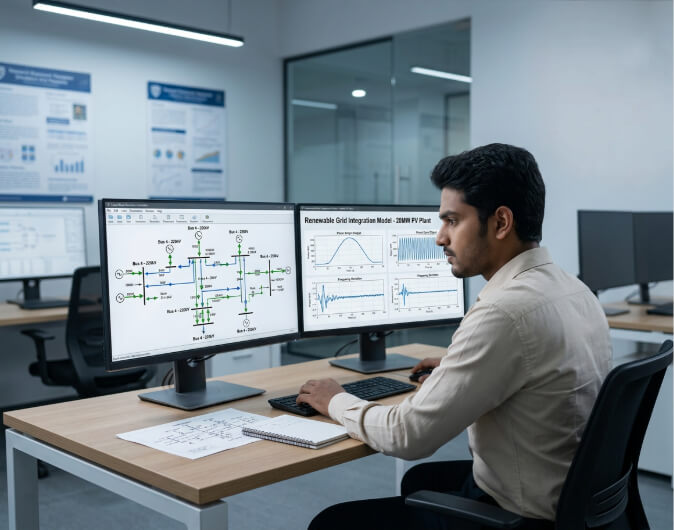
Well-equipped laboratories and simulation facilities ensure strong hands-on experience in electrical systems and technologies.
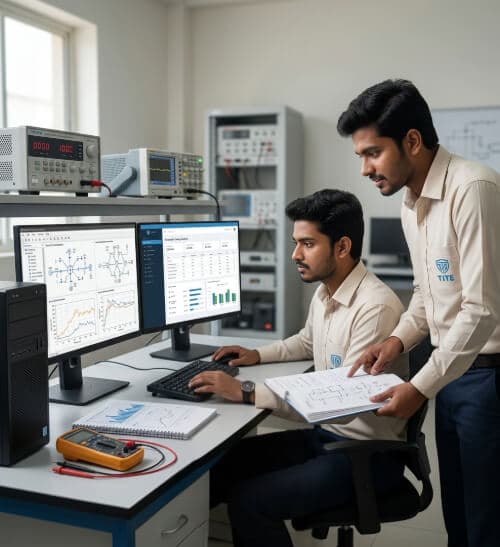
Research & Project Opportunities
Students are encouraged to work on real-world projects, dissertations, and interdisciplinary research areas.

Career-Focused Approach
Training, workshops, and placement support prepare students for roles in core electrical industries, PSUs, and emerging tech sectors.
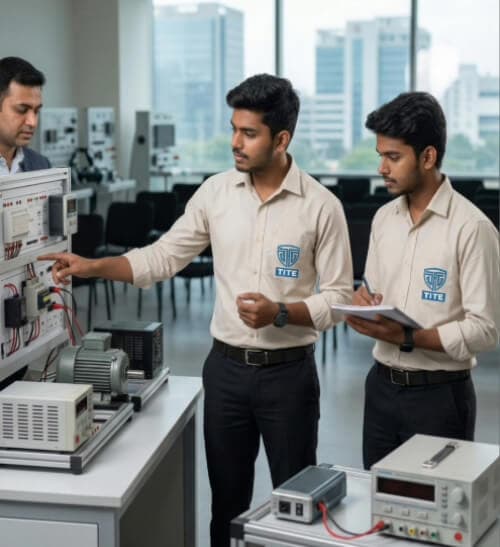
Strategic Location
Being in proximity to Bhubaneswar, a growing educational and industrial hub, students get exposure to opportunities across Odisha and India.
The Future Is TITE-Made
AI is reshaping industries. At TITE, we teach you to use it to shape your career—with guaranteed placements.

Bibhudutt Behera
Senior Associate — Technology & Transformation (2019–2023, CSE)


TITE didn't just give me a degree — it gave me direction. The faculty pushed us to think beyond textbooks, and the exposure to real-world tools prepared me for the demands of a company like Deloitte. Every challenge I face at work today, I can trace back to a lesson I learned on that campus.


Message from the head of department

Outcome-Based Education Framework
Program Outcomes (POs)
PO1 – Engineering Knowledge
Graduates will be able to apply the knowledge of mathematics, science, engineering fundamentals, and engineering specialization to solve complex engineering problems.
PO2 – Problem Analysis
Graduates will possess the ability to identify, formulate, review research literature, and analyze complex engineering problems using principles of mathematics, natural sciences, and engineering sciences to arrive at well-founded conclusions.
PO3 – Design and Development of Solutions
Graduates will be capable of designing solutions for complex engineering problems, including the design of system components or processes that meet specified needs while considering public health, safety, cultural, societal, and environmental factors.
PO4 – Investigation of Complex Problems
Graduates will be adept at conducting investigations using research-based knowledge and methods, including experiment design, data analysis, and synthesis, to derive valid conclusions.
PO5 – Modern Tool Usage
Graduates will be skilled in selecting and applying appropriate modern engineering and IT tools and techniques for complex engineering tasks, with a clear understanding of their limitations.
PO6 – The Engineer and Society
Graduates will be able to assess societal, health, safety, legal, and cultural issues informed by contextual knowledge, and understand their responsibilities as professional engineers.
PO7 – Environment and Sustainability
Graduates will understand the impact of engineering solutions in societal and environmental contexts and demonstrate a commitment to sustainable development.
PO8 – Ethics
Graduates will uphold ethical principles and commit to professional ethics, responsibilities, and norms of engineering practice.
PO9 – Individual and Team Work
Graduates will be effective team members and leaders, capable of working independently or collaboratively in diverse and multidisciplinary teams.
PO10 – Communication
Graduates will be able to communicate effectively on complex engineering activities with peers, the engineering community, and society at large, through clear reports, documentation, presentations, and instructions.
PO11 – Project Management and Finance
Graduates will demonstrate knowledge of engineering and management principles and apply them to manage projects effectively as individuals and team leaders in multidisciplinary environments.
PO12 – Life-Long Learning
Graduates will recognize the need for lifelong learning and be equipped to independently acquire and apply new knowledge and skills in the context of technological advancements.

Frequently Asked Questions
Which MTech course is best for electrical engineering?
The "best" Electrical Engineering M.Tech specialization will depend on your professional objectives, however Power Electronics, Microelectronics/VLSI, and Control Systems are generally considered to be the best options due to their high demand, outstanding placements, and future scope.
How many years is MTech in electrical engineering at TITE Bhubaneswar?
The M. Tech. programme in electrical engineering is a 2- year full- time course divided into 4 semesters.
Which is better MCA or MTech Electrical engineering?
If you want to work in deep, research-focused technical roles related to the electrical field, get an M.Tech electrical engineering; if you want to work in software development right away and be prepared for the IT industry, get an MCA.
Which is better, ECE or EE salary?
In general, ECE offers more corporate career choices and greater initial earnings, especially in tech-driven industries. On the other hand, EE offers greater earning potential and better stability in key government and electricity industries.
Does MTech in electrical engineering increase salary?
An M.Tech in electrical engineering boosts your pay and job prospects, particularly for specialized positions. However, the precise advantages vary depending on your work experience.
