

Learn Deeper. Lead Civil Engineering’s Future.
Join TITE for a Civil Engineering M.Tech in Odisha and build expertise to step into roles that shape the future of construction.
M.Tech in Civil Engineering at TITE, Bhubaneswar


Intake Capacity
TITE is consistently rising to make its place among the best M.Tech Civil Engineering colleges in Odisha by producing graduates who are technically grounded and professionally ready. With faculty members holding advanced degrees and active research experience, the M.Tech Civil Engineering department in TITE Odisha offers a learning environment where foundational concepts meet real-world application. Our M.Tech Civil Engineering program in Bhubaneswar is affiliated with Biju Patnaik University of Technology (BPUT) and approved by AICTE — ensuring that the degree you earn holds value across industries, government bodies, and academic institutions alike.
What sets our civil engineering postgraduate course in Bhubaneswar apart is a curriculum that keeps pace with industry demand. The scope of M.Tech Civil Engineering at TITE includes a vast range of subjects from advanced structural analysis and construction management to geotechnical engineering and sustainable design practices. Students work in well-equipped laboratories, engage with live project case studies, and benefit from faculty mentorship throughout their dissertation work. With TITE's established placement network and strong industry connections, M.Tech Civil Engineering graduates have gone on to build careers in infrastructure consultancy, public sector projects, research institutions, and higher education, right here in Odisha and beyond.
Programme Name: M.Tech in Civil Engineering


OURVISION

OURMISSION
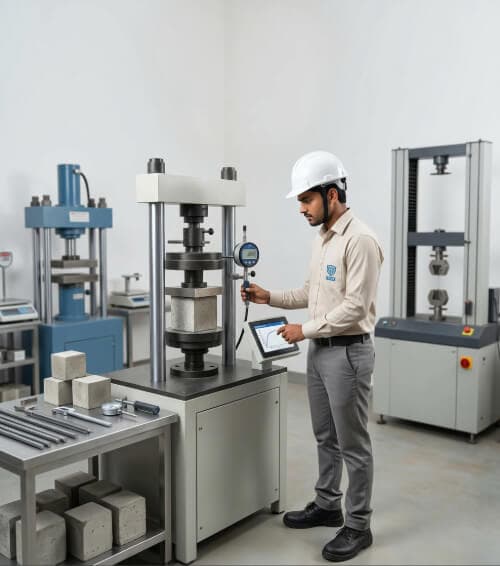
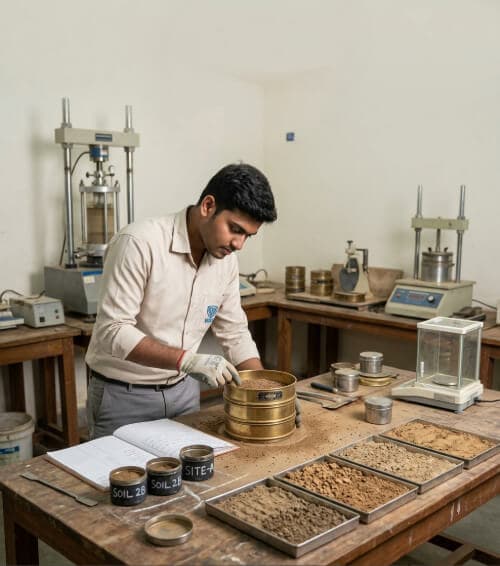
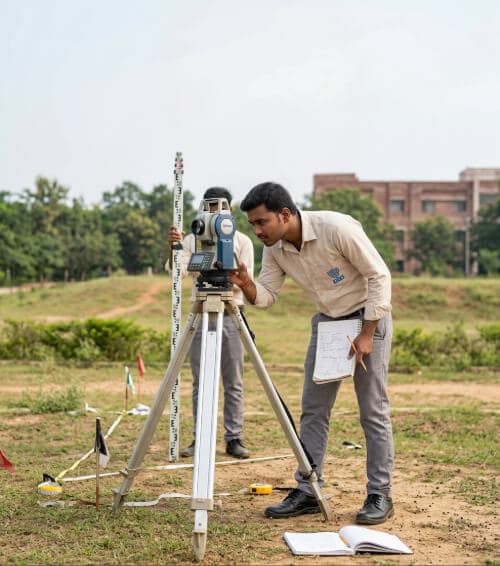
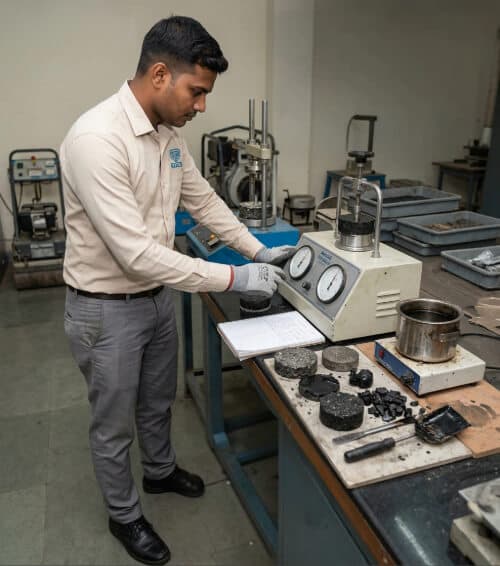
Advanced Civil Engineering Labs for Practical Exposure
Join one of the best B.Tech, M.Tech and MBA colleges in Odisha and build a future powered by innovation, AI, and real-world skills.


Ready to Take Your Civil Engineering Career To The Next Level?
Apply NowWhy Choose TITE for M.Tech in Civil Engineering?

Dynamic curriculum aligned with today's infrastructure demands
The M.Tech Civil Engineering programme at TITE goes beyond textbook theory. The curriculum is structured to reflect current industry practice, covering advanced structural analysis, geotechnical engineering, sustainable construction, and construction project management — giving graduates the technical depth that employers and research institutions actively look for.

Experienced faculty with active research and industry engagement
Our postgraduate students learn from faculty members who bring a blend of academic rigour and applied experience. With ongoing engagement in research, consultancy, and professional development, TITE's Civil Engineering faculty are equipped to guide students through both coursework and dissertation work with meaningful mentorship.
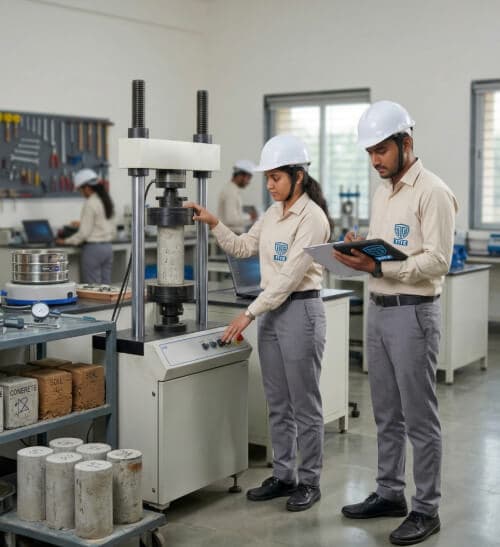
Well-equipped labs that support hands-on learning
From structural testing to geotechnical investigation, TITE's Civil Engineering laboratories are designed to give M.Tech students practical exposure to real engineering scenarios. This hands-on approach reinforces conceptual understanding and prepares students to handle field and site challenges with confidence from day one of their careers.

Career pathways across private industry, government, and academia
An M.Tech degree from TITE opens doors across multiple sectors, including infrastructure consultancy, government public works departments, construction firms, R&D organisations, and higher education. With TITE's established placement network and support for competitive exam preparation, graduates are well-positioned to pursue the career path that suits them best.
The Future Is TITE-Made
AI is reshaping industries. At TITE, we teach you to use it to shape your career—with guaranteed placements.

Bibhudutt Behera
Senior Associate — Technology & Transformation (2019–2023, CSE)


TITE didn't just give me a degree — it gave me direction. The faculty pushed us to think beyond textbooks, and the exposure to real-world tools prepared me for the demands of a company like Deloitte. Every challenge I face at work today, I can trace back to a lesson I learned on that campus.


Message from the head of department

Outcome-Based Education Framework
Program Outcomes (POs)
PO1 – Engineering Knowledge
Graduates will be able to apply the knowledge of mathematics, science, engineering fundamentals, and engineering specialization to solve complex engineering problems.
PO2 – Problem Analysis
Graduates will possess the ability to identify, formulate, review research literature, and analyze complex engineering problems using principles of mathematics, natural sciences, and engineering sciences to arrive at well-founded conclusions.
PO3 – Design and Development of Solutions
Graduates will be capable of designing solutions for complex engineering problems, including the design of system components or processes that meet specified needs while considering public health, safety, cultural, societal, and environmental factors.
PO4 – Investigation of Complex Problems
Graduates will be adept at conducting investigations using research-based knowledge and methods, including experiment design, data analysis, and synthesis, to derive valid conclusions.
PO5 – Modern Tool Usage
Graduates will be skilled in selecting and applying appropriate modern engineering and IT tools and techniques for complex engineering tasks, with a clear understanding of their limitations.
PO6 – The Engineer and Society
Graduates will be able to assess societal, health, safety, legal, and cultural issues informed by contextual knowledge, and understand their responsibilities as professional engineers.
PO7 – Environment and Sustainability
Graduates will understand the impact of engineering solutions in societal and environmental contexts and demonstrate a commitment to sustainable development.
PO8 – Ethics
Graduates will uphold ethical principles and commit to professional ethics, responsibilities, and norms of engineering practice.
PO9 – Individual and Team Work
Graduates will be effective team members and leaders, capable of working independently or collaboratively in diverse and multidisciplinary teams.
PO10 – Communication
Graduates will be able to communicate effectively on complex engineering activities with peers, the engineering community, and society at large, through clear reports, documentation, presentations, and instructions.
PO11 – Project Management and Finance
Graduates will demonstrate knowledge of engineering and management principles and apply them to manage projects effectively as individuals and team leaders in multidisciplinary environments.
PO12 – Life-Long Learning
Graduates will recognize the need for lifelong learning and be equipped to independently acquire and apply new knowledge and skills in the context of technological advancements.

Frequently Asked Questions
What are the best career options after completing an M.Tech in Civil Engineering?
Graduates can step into highly specialized roles that go beyond baseline site engineering. The top career paths include Structural Engineers, Geotechnical Consultants, Transportation Planners, Project Managers, and Environmental Engineers. Additionally, an M.Tech opens lucrative avenues in research (R&D organizations) and academia as Assistant Professors.
Can an M.Tech Civil Engineering graduate get government jobs in India?
Yes, an M.Tech degree provides a distinct competitive edge for higher-level technical posts. Graduates can secure Class-1 officer positions in government bodies like the Central Public Works Department (CPWD), Indian Railways, National Highways Authority of India (NHAI), and State Public Works Departments (PWDs) through the Engineering Services Examination (ESE) or state-level PSC exams.
What roles do M.Tech Civil Engineering graduates get in top private construction firms?
In private conglomerates like L&T, Tata Projects, and Afcons, postgraduates are typically fast-tracked into specialized design and management tracks. Instead of routine site supervision, M.Tech holders are deployed as Senior Design Engineers, Cost Estimators, BIM Managers, and Project Planning Leads.
Which Civil Engineering specialization pays the highest salary in India?
Currently, Structural Engineering and Construction Project Management (CPM) yield the highest packages in India. Structural specialists are highly valued by high-rise and infrastructure consultancies, while Construction Management professionals command top dollar for minimizing cost overruns on mega-infrastructure projects.
What is the scope of Smart Infrastructure and Green Building for M.Tech graduates?
Sustainable construction is no longer optional. M.Tech curricula focusing on Environmental Engineering or Sustainable Construction Materials open global career paths. Graduates work as Sustainability Consultants, Green Building Auditors (LEED/GRIHA), and specialists in low-carbon footprint infrastructure design.
