

Build a Career in Agribusiness Leadership
Join TITE MBA Agribusiness Management and Lead the Future of Food & Farming
About TITE’s Department of MBA in Agribusiness Management
Intake Capacity
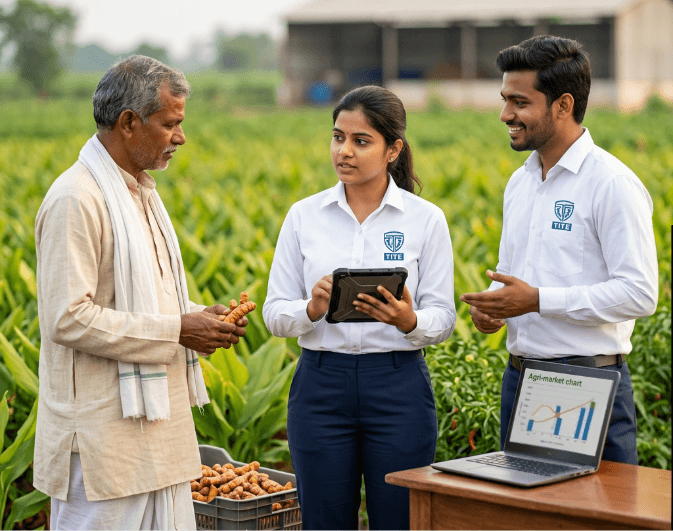
The MBA department at TITE offers an MBA in Agribusiness Management in Bhubaneswar that sits at the intersection of two of India's most consequential worlds — agriculture and business. Designed to meet the eligibility expectations of today's agribusiness sector, the program gives students a thorough grounding in core management disciplines alongside specialised agribusiness management subjects such as agri-marketing, supply chain management, commodity trading, rural finance, food processing, and cooperative systems. Rather than treating these as separate domains, the curriculum weaves them together, reflecting how the agribusiness sector actually works. Students also gain exposure to evolving areas such as agri-technology, precision farming business models, and agricultural trade policy, preparing them for a sector that is changing faster than most.
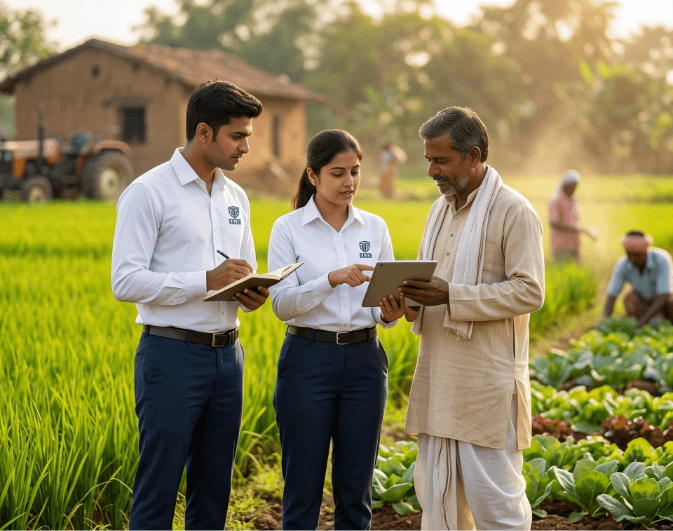
What makes the TITE MBA Agribusiness Management genuinely valuable is the way it translates knowledge into professional readiness. Through field visits to agri-based enterprises, live projects, and interactions with industry practitioners, students develop the kind of ground-level understanding that classroom learning alone cannot provide. For students exploring MBA Agribusiness admission in Odisha, TITE stands out as one of the focused MBA Agribusiness colleges in Bhubaneswar, preparing graduates for opportunities across agri-tech ventures, FMCG companies, commodity trading firms, rural banking institutions, and government-backed development programmes at a national scale.
Programme Name: MBA in Agribusiness Management

OURVISION

OURMISSION
To impart quality education in agribusiness through modern management practices and industry-oriented curriculum.
To develop entrepreneurial and leadership skills for agribusiness and allied sectors.
To promote research, innovation, and sustainable practices in agriculture and rural development.
To strengthen industry–academia collaboration for experiential learning and employability
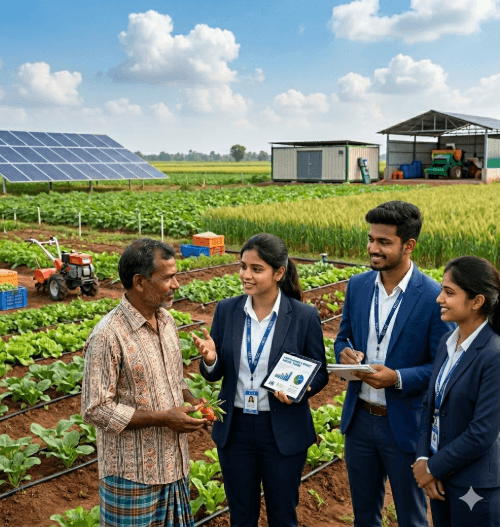
To nurture socially responsible managers committed to improving farmers’ livelihoods and agri-value chains.

Reap Career Success with an Agribusiness MBA from TITE.
Apply NowWhy Choose TITE for an MBA in Agribusiness Management?
Specialised Agribusiness Curriculum
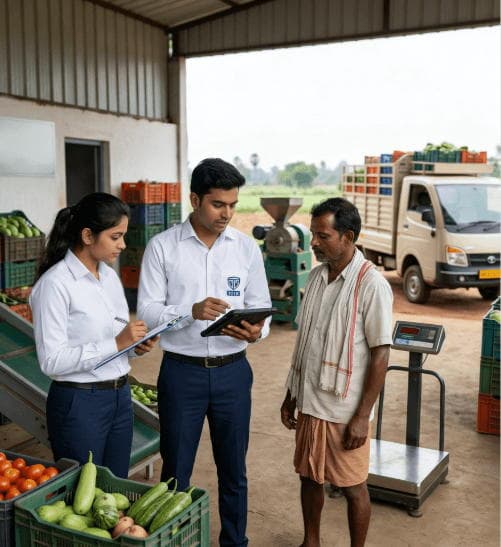
Go beyond generic MBAs with a syllabus tailored to agri supply chains, food processing industries, rural marketing, and agri-finance—aligned with evolving industry needs.
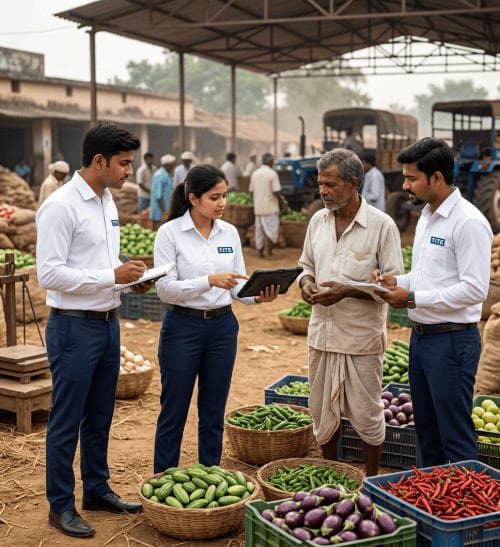
Field Immersion & Rural Exposure
Engage directly with farming communities, agri-enterprises, and mandis to understand real-world challenges and opportunities in the agricultural ecosystem.

Industry-Aligned Learning
Learn through case studies and projects focused on agri startups, cooperatives, and agri-export businesses—preparing you for diverse roles in the sector.

Career Pathways Across Sectors
Unlock opportunities in agri-tech firms, FMCG companies, microfinance institutions, and government initiatives driving rural development.

Strategic Location Advantage
Study in Odisha, a state with a strong agricultural base, giving you access to real-time insights, internships, and regional industry exposure.
The Future Is TITE-Made
AI is reshaping industries. At TITE, we teach you to use it to shape your career—with guaranteed placements.

Liakat Ali Khan
MBA Graduate (2020–2022)


I am proud to have achieved a standout placement with Forman Technology Pvt. Ltd. with a package of ₹30 LPA. My journey at TITE during my MBA (2020–2022) was truly transformative. The constant support from faculty, practical learning approach, and industry exposure helped me build strong skills and confidence. I’m grateful for the opportunities it provided.


Message from the head of department

Outcome-Based Education Framework
Program Outcomes (POs)
PO1 – Leadership and Management
Develop the students with requisite knowledge, skills & right attitude necessary to create effective leadership that enables students to prove, develop, and sustain in a global environment.
PO2 – Problem Analysis
Identify, formulate, review research literature, and analyze complex business problems and reach substantiated conclusions using the principles and concepts of business and management.
PO3 – Design and Development of Solutions
Design solutions for complex business problems and design systems or processes that meet the specified needs with appropriate consideration for the law of the land, and the cultural, societal, and environmental considerations.
PO4 – Scanning and Solution to Complex Problems
Use research-based knowledge and research methods, including design of statistical applications for analysis and interpretation of data, and thereby arrive at definitive alternatives to provide valid conclusions.
PO5 – Modern Concepts and Usage
Create, select, and apply appropriate techniques, resources, and modern management processes and IT tools, including prediction and modeling to complex business problems and boundaries.
PO6 – Environment and Sustainability
Evaluate business environment and opportunities and devise strategies for responding effectively to problems, threats, and opportunities. Understand the impact of professional methods in providing solutions, keeping in view the societal and environmental contexts, and demonstrate the knowledge and need for sustainable development.
PO7 – Professional Ethics
Apply ethical principles and commit to professional ethics and responsibilities and norms of the management practices.
PO8 – Individual and Team Work
Summarize and apply theories of team composition, process, and motivation (including inclusivity and diversity) to effectively manage work teams.
PO9 – Communication
Communicate effectively on complex business management activities with the industry and with society at large, such as being able to comprehend and write effective reports and design documentation, make effective presentations, and give and receive clear instructions. Construct and communicate a logical, relevant, and professional quantitative assessment of business information in an effective manner.
PO10 – Project Management and Finance
Demonstrate knowledge and understanding of the business and management principles and apply those to one’s own work, as a member and leader in a team, and to manage projects in multidisciplinary environments.
PO11 – Continuous Learning
Recognize the need for, and have the preparedness and ability to engage in independently and also keep continuous learning in the broadest context of changes happening in business management.
PO12 – Global Perspective and Multicultural Competence
Understand and respect diversity and multicultural business practices.

Frequently Asked Questions
What is the scope of an MBA in agribusiness management?
An MBA in Agribusiness Management integrates fundamental business concepts with the particular difficulties faced by the food production and agriculture sectors. In order to bridge the gap between agricultural production and international consumer markets, it trains experts to handle everything from supply chains and commodities trading to rural banking and agri-tech.
Who is eligible for MBA in agribusiness?
A recognized bachelor's degree with a minimum aggregate of 50% to 55% is required to be eligible for an MBA in Agribusiness (45% for reserved categories). Graduates from any stream are welcome to apply, but those with experience in food science, agriculture, or life sciences are strongly encouraged.
What are the benefits of MBA in agribusiness?
You may apply fundamental business principles to the agricultural and food industries with an MBA in Agribusiness. It opens opportunities to profitable positions in food processing, commodities trading, supply chain management, and sustainable agritech by bridging the gap between conventional farming and the corporate market.
What subjects are covered in an Agribusiness MBA syllabus?
The curriculum bridges core management functions with specialized agricultural subjects are Agri-Marketing & Commodity Trading, Supply Chain & Logistics Management, Rural Finance and Microfinance, Food Processing & Cooperative Systems and Agri-Technology & Precision Farming Business Models
What jobs can I get after completing an MBA in Agribusiness Management?
Graduates find diverse opportunities across private, cooperative, and public sectors are Agribusiness Manager, Commodity Trader / Market Analyst, Supply Chain Manager, Rural Banking / Agricultural Loan Officer, Relationship Manager and Business Development Executive in Agri-Tech Startups
