Connect Your Ideas to Real-World Technology
Join TITE - Best Engineering College for Electronics and Communication in Bhubaneswar
B.Tech Electronics and Communication Engineering at TITE, Bhubaneswar
Intake Capacity
The Department of Electronics and Communication Engineering at TITE is steadily gaining recognition among the top Electronics and Communication Engineering colleges in Bhubaneswar for its balanced approach to learning. The programme builds a strong foundation in electronic circuits, communication systems, signal processing, and embedded technologies, while introducing students to evolving areas such as IoT and wireless communication. For those exploring an ECE college in Odisha, the department offers a structured path that connects theory with application from the early semesters.
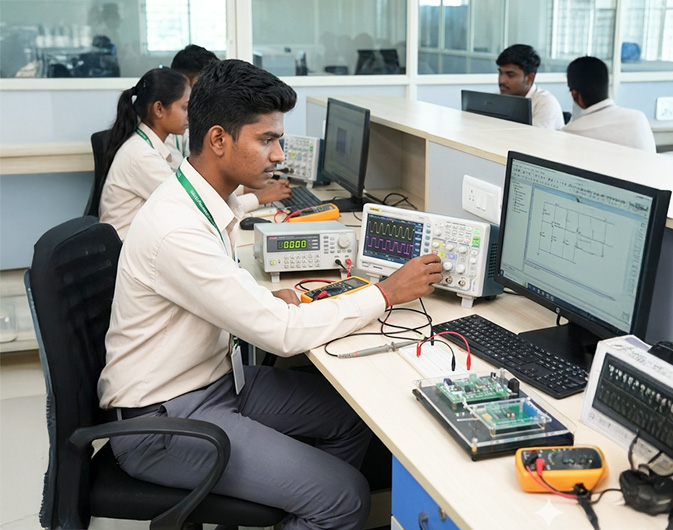
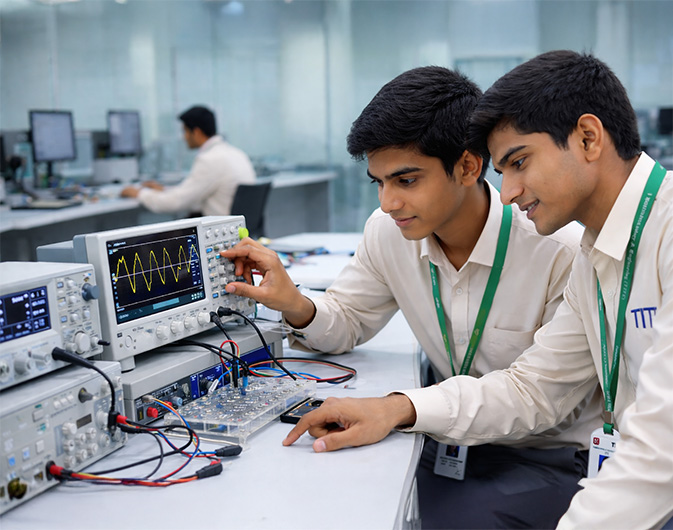
What sets TITE apart as the best engineering college for electronics and communication is its focus on clarity, practice, and outcomes. Students work in well-equipped labs, engage in guided projects, and learn to troubleshoot, design, and optimise real systems. The programme also maintains transparency around Electronics and Communication Engineering in Odisha fees, ensuring students and parents can make informed decisions. With consistent academic support and exposure to industry-relevant skills, graduates are prepared for roles in core electronics, telecom, embedded systems, and allied technology sectors.
Programme Name: B.Tech in Electronics & Communication Engineering

OURVISION

OURMISSION
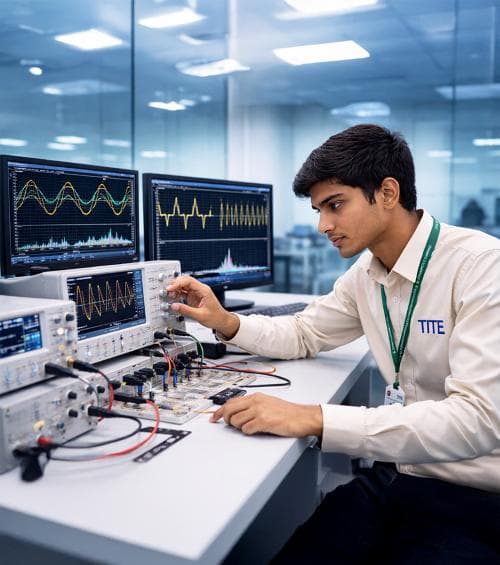
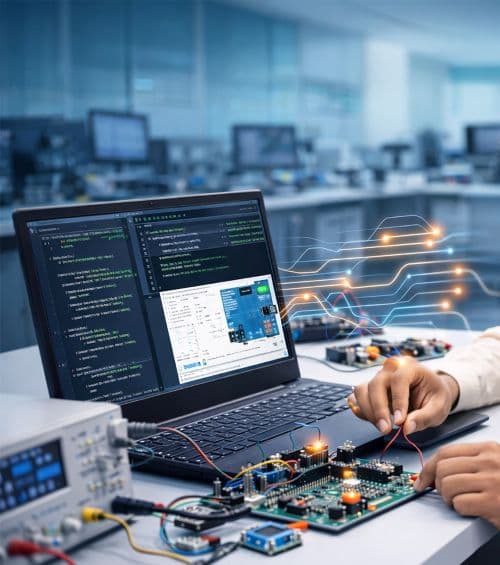
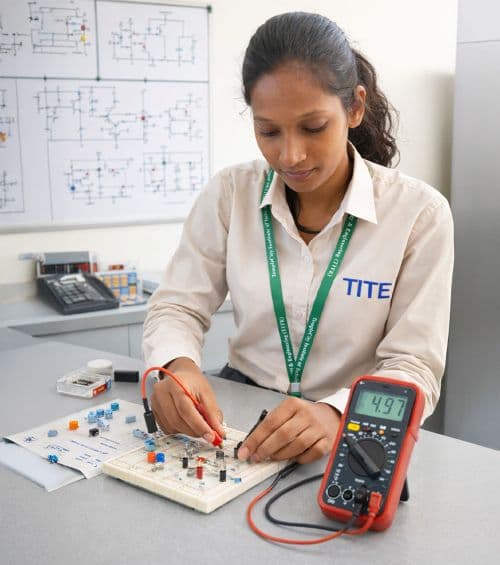
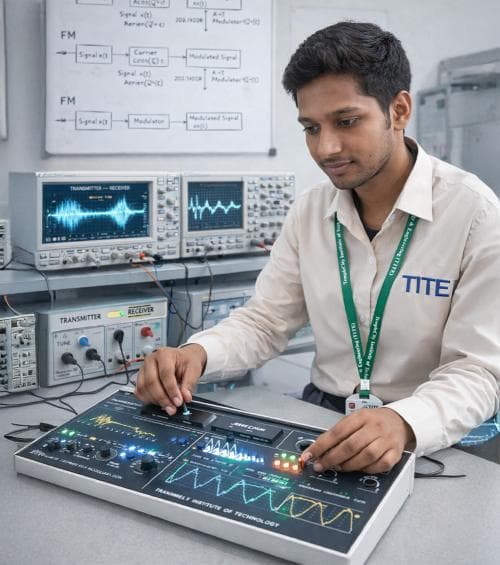
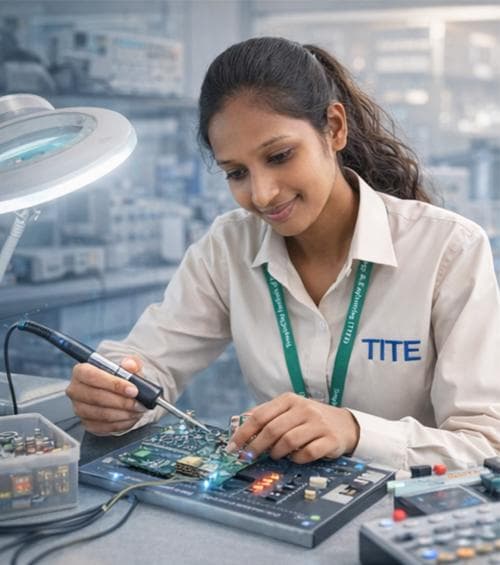
Advanced Electronics and Communication Engineering Lab Facilities
Join one of the best B.Tech, M.Tech and MBA colleges in Odisha and build a future powered by innovation, AI, and real-world skills.
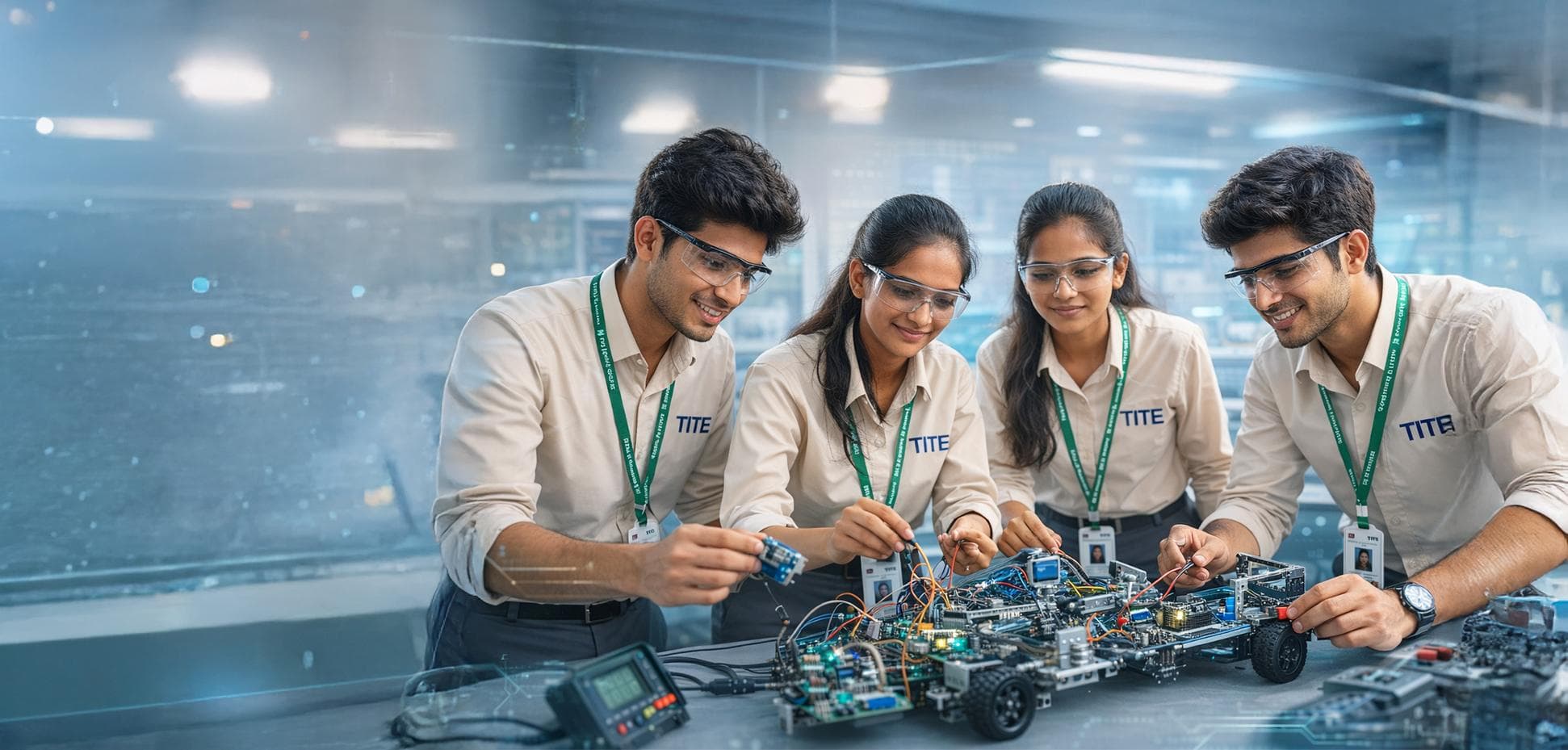
Step into the Core of Modern Electronics at TITE.
Apply NowWhy Choose TITE for B.Tech in Electronics and Communication Engineering?
Experienced Faculty
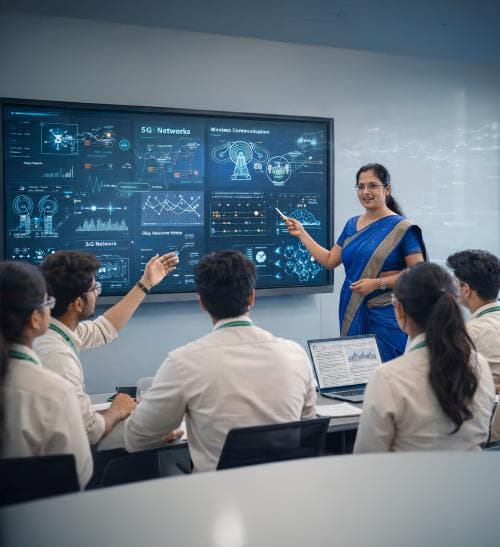
Our department boasts highly qualified faculty with expertise in Wireless Technology, Massive MIMO, 5G, Analog Electronics, Communication Systems, and more. Faculty members come from prestigious institutions and industry backgrounds, actively engaging in research and publishing in IEEE conferences as well as national and international journals.
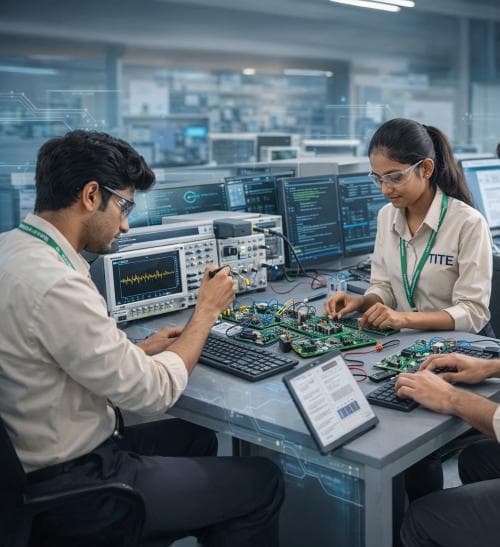
State-of-the-art Facilities
Students gain hands-on experience in well-equipped laboratories. These labs feature cutting-edge hardware and software resources to support and extend the academic curriculum.
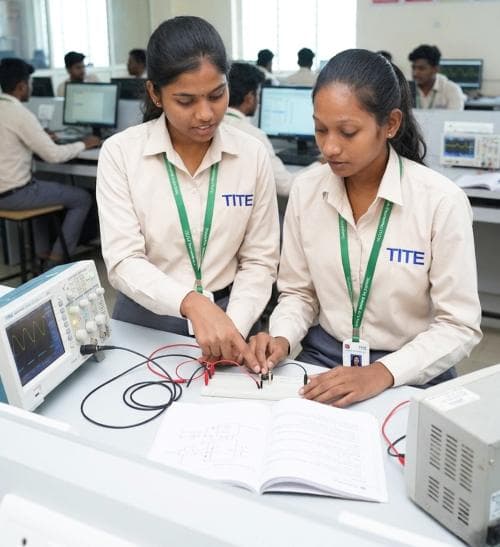
Comprehensive Curriculum
Our curriculum covers fundamental and advanced topics such as analog and digital electronics, communication systems, signal processing, embedded systems, and VLSI design, preparing students for diverse technical roles in industry and research.
The Future Is TITE-Made
AI is reshaping industries. At TITE, we teach you to use it to shape your career—with guaranteed placements.

Bibhudutt Behera
Senior Associate — Technology & Transformation (2019–2023, CSE)


TITE didn't just give me a degree — it gave me direction. The faculty pushed us to think beyond textbooks, and the exposure to real-world tools prepared me for the demands of a company like Deloitte. Every challenge I face at work today, I can trace back to a lesson I learned on that campus.


Message from the head of department

Outcome-Based Education Framework
Program Outcomes (POs)
PO1 – Engineering Knowledge
Graduates will be able to apply the knowledge of mathematics, science, engineering fundamentals, and engineering specialization to solve complex engineering problems.
PO2 – Problem Analysis
Graduates will possess the ability to identify, formulate, review research literature, and analyze complex engineering problems using principles of mathematics, natural sciences, and engineering sciences to arrive at well-founded conclusions.
PO3 – Design and Development of Solutions
Graduates will be capable of designing solutions for complex engineering problems, including the design of system components or processes that meet specified needs while considering public health, safety, cultural, societal, and environmental factors.
PO4 – Investigation of Complex Problems
Graduates will be adept at conducting investigations using research-based knowledge and methods, including experiment design, data analysis, and synthesis, to derive valid conclusions.
PO5 – Modern Tool Usage
Graduates will be skilled in selecting and applying appropriate modern engineering and IT tools and techniques for complex engineering tasks, with a clear understanding of their limitations.
PO6 – The Engineer and Society
Graduates will be able to assess societal, health, safety, legal, and cultural issues informed by contextual knowledge, and understand their responsibilities as professional engineers.
PO7 – Environment and Sustainability
Graduates will understand the impact of engineering solutions in societal and environmental contexts and demonstrate a commitment to sustainable development.
PO8 – Ethics
Graduates will uphold ethical principles and commit to professional ethics, responsibilities, and norms of engineering practice.
PO9 – Individual and Team Work
Graduates will be effective team members and leaders, capable of working independently or collaboratively in diverse and multidisciplinary teams.
PO10 – Communication
Graduates will be able to communicate effectively on complex engineering activities with peers, the engineering community, and society at large, through clear reports, documentation, presentations, and instructions.
PO11 – Project Management and Finance
Graduates will demonstrate knowledge of engineering and management principles and apply them to manage projects effectively as individuals and team leaders in multidisciplinary environments.
PO12 – Life-Long Learning
Graduates will recognize the need for lifelong learning and be equipped to independently acquire and apply new knowledge and skills in the context of technological advancements.

Frequently Asked Questions
What is the scope of BTech in ECE?
The scope of a B.Tech in Electronics and Communication Engineering (ECE) is enormous and future-proof. It provides access to rapidly expanding international industries like semiconductor manufacturing, 5G/6G telecommunications, artificial intelligence, and the Internet of Things (IoT) as it stands at the crossroads of hardware and software.
Which is better CSE or BTech ECE?
While B.Tech ECE (Electronics & Communication Engineering) bridges hardware and software, concentrating on circuit design, semiconductors, and telecommunications. B.Tech CSE (Computer Science & Engineering) concentrates on software, algorithms, and AI. While ECE gives flexibility in both the hardware and IT areas, CSE offers a straight route to software jobs.
What is the salary of ECE in India?
In India, an Electronics and Communication Engineering (ECE) graduate typically makes between ₹3.5 LPA and ₹12 LPA, depending on region, experience, and a particular skill set.
Is ECE in high demand?
Indeed, there is a great demand for Electronics and Communication Engineering (ECE). Global investments in semiconductor production, AI hardware integration, 5G/6G networks, electric vehicles (EVs), and the Internet of Things (IoT) are the main drivers of growth.
How many subjects are in ECE engineering?
An undergraduate program in Electronics and Communication Engineering (ECE) usually lasts four years and requires students to finish between forty and fifty different subjects. This covers basic scientific courses, fundamental electronics subjects, practical lab experiences, and specialized electives.
